
What this guide covers
- GPA inflation means grades are going up, even if students aren't learning more.
- GPA deflation means grades are going down.
- Weighted GPAs give more points for hard classes.
- Unweighted GPAs treat all classes the same.
- The GPA Calculator can help you understand your GPA.
What is GPA and Why Does It Matter?
GPA is like a score for your school work. Teachers give you grades, like A, B, or C. Then, these grades turn into numbers. The numbers are added up to make your GPA.
GPA is important for many things. Colleges look at your GPA when you apply. If you want a scholarship, you need a good GPA. Your GPA can even decide where you rank in your class. Some jobs also look at your GPA.
The average GPA in high school is about 3.0. This is like getting mostly B's. If you want to go to a good college, you might need a GPA of 3.5 or higher. Some colleges want 4.0 or higher.
Weighted vs. Unweighted GPA: A Quick Recap
There are two types of GPAs: weighted and unweighted. An unweighted GPA is simple. It uses a scale from 0 to 4.
Here is how it works:
| Letter Grade | GPA Points |
|---|---|
| A | 4.0 |
| B | 3.0 |
| C | 2.0 |
| D | 1.0 |
| F | 0.0 |
Every class counts the same. A hard class and an easy class both give you the same points.
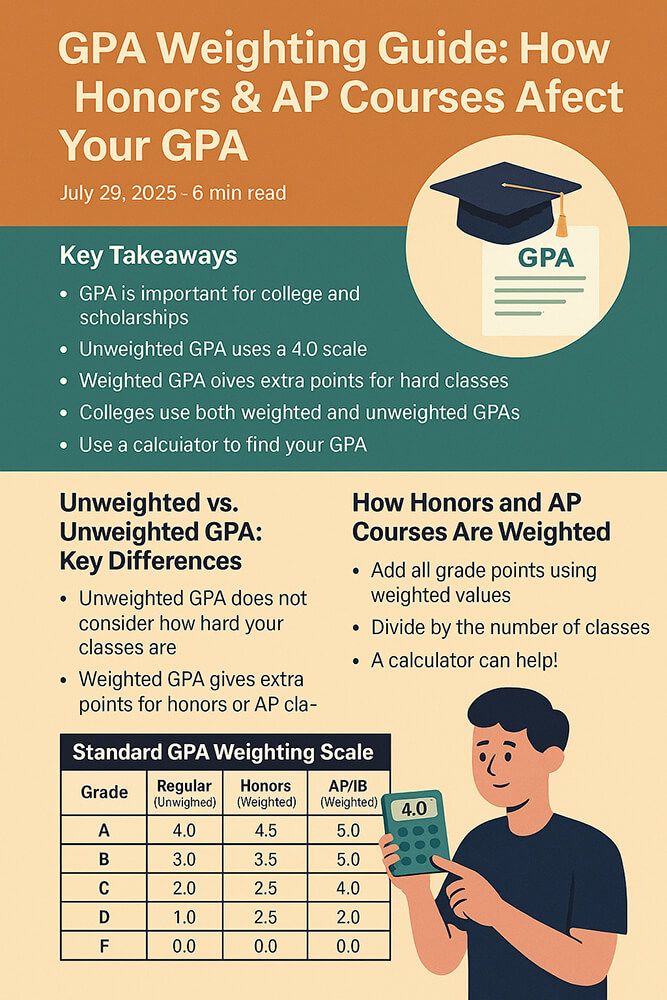
A weighted GPA is different. It gives you more points for hard classes. These classes are often called honors, AP, or IB classes. If you get an A in an AP class, you get more than 4.0 points. This shows colleges that you took hard classes.
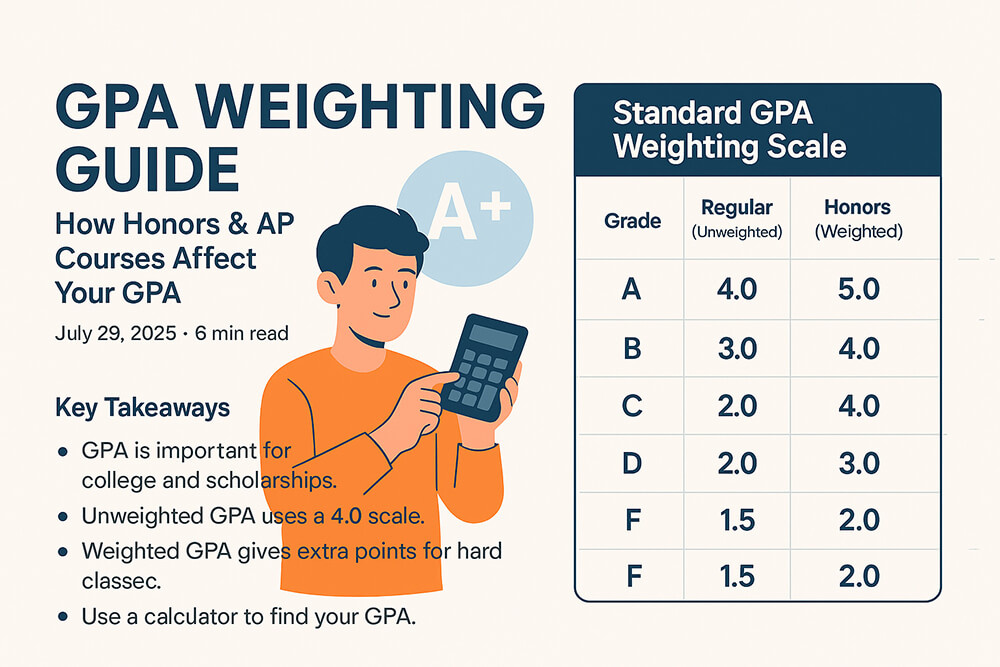
Example Calculation: Weighted vs Unweighted
Let's see how it works. Imagine a student takes three classes:
- English (Regular, 3 credits): A (4.0)
- AP Calculus (4 credits): B (4.0 weighted, 3.0 unweighted)
- Honors Biology (3 credits): A (4.5 weighted, 4.0 unweighted)
First, let's calculate the unweighted GPA. We multiply the points by the credits:
(4.0 x 3) + (3.0 x 4) + (4.0 x 3) = 12.0 + 12.0 + 12.0 = 36.0
Then, we add up the credits: 3 + 4 + 3 = 10
Finally, we divide the points by the credits: 36.0 / 10 = 3.60
Now, let's calculate the weighted GPA. We do the same thing, but with the weighted points:
(4.0 x 3) + (4.0 x 4) + (4.5 x 3) = 12.0 + 16.0 + 13.5 = 41.5
We still add up the credits: 10
Finally, we divide the points by the credits: 41.5 / 10 = 4.15
You can also use this GPA Formula Guide
GPA Inflation: Rising Grades Over Time
GPA inflation is when grades get higher over time. This means students get better grades for the same amount of work. GPAs are going up in many schools.
The historical series cited for this guide reports that its average GPA rose from 3.17 in 2010 to 3.36 in 2021. The dates and population matter when interpreting that change.
Factors Contributing to GPA Inflation
One reason is that teachers might be giving easier grades. They want students to feel good about themselves. Also, schools care more about student mental health. They don't want to stress students out with hard grades.
How GPA Inflation Affects College Admissions
If everyone has high GPAs, it is harder to stand out. Colleges might look at other things, like your activities. They might also look at your test scores. You need to do more than just get good grades.
GPA Deflation: When Grades Drop
GPA deflation is the opposite of inflation. It is when grades go down. This can happen when schools make classes harder. It can also happen when teachers give tougher grades.
How GPA Deflation Affects Students
GPA deflation can make students feel bad. They might think they are not smart enough. It can also make it harder to get into college. If your school has GPA deflation, you need to work extra hard.
Navigating GPA Trends with The GPA Calculator
The GPA Calculator can calculate a course-and-credit GPA from the values you enter. It does not compare your record with a student population. Use an institution or dataset named in the sources when you need a historical benchmark.

Understanding Credit Hour Weighting
Credit hours are like points for each class. Harder classes might have more credit hours. This means they count more towards your GPA.
You can read more about it here: Credit Hour Weighting GPA Guide
The Role of Quality Points in GPA
Quality points are the points you get for each grade. An A might be worth 4 quality points. A B might be worth 3. These points are used to calculate your GPA.
You can read more about it here: Quality Points vs. GPA Explained

Letter to Point Conversion
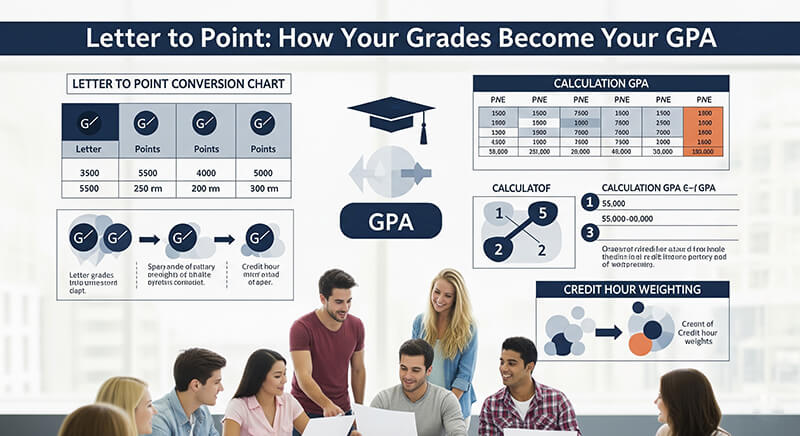
Each letter grade turns into a number. This is called letter to point conversion. It helps you calculate your GPA.
You can read more about it here: Letter to Point GPA Conversion Guide
Pass/Fail Grades and GPA
Pass/fail treatment varies. A passing grade is often excluded from GPA points, while a failing outcome may be handled differently; use the institution's published policy.
You can read more about it here: How Pass/Fail Grades Impact Your GPA
Common GPA Calculation Errors
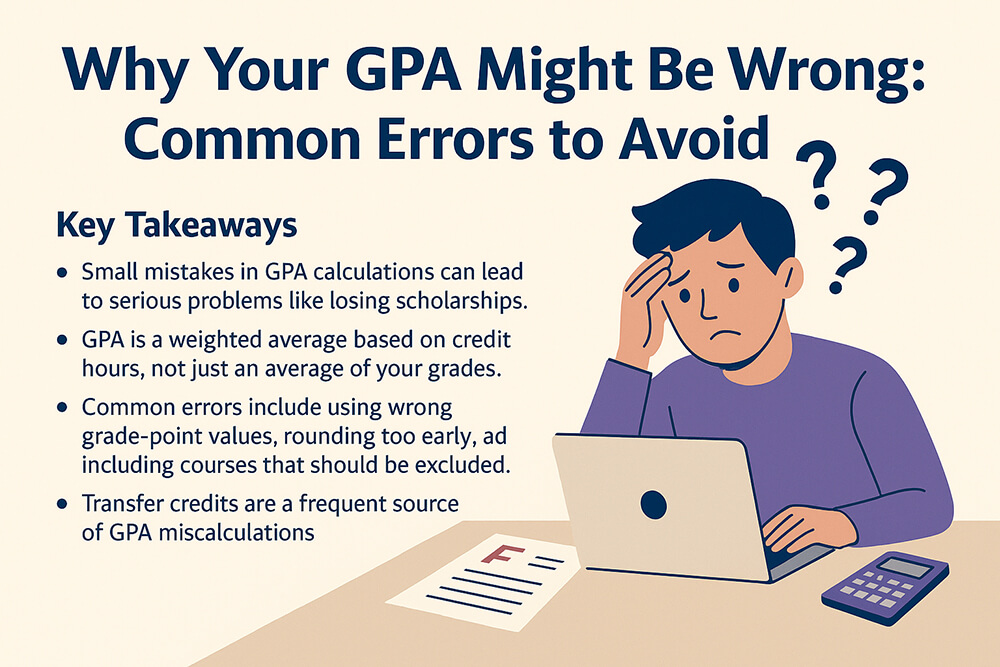
Sometimes, people make mistakes when they calculate their GPA. They might add the numbers wrong. Or, they might forget to include a class. Make sure you double-check your work!
You can read more about it here: Common GPA Calculation Errors to Avoid
Understanding the GPA Formula
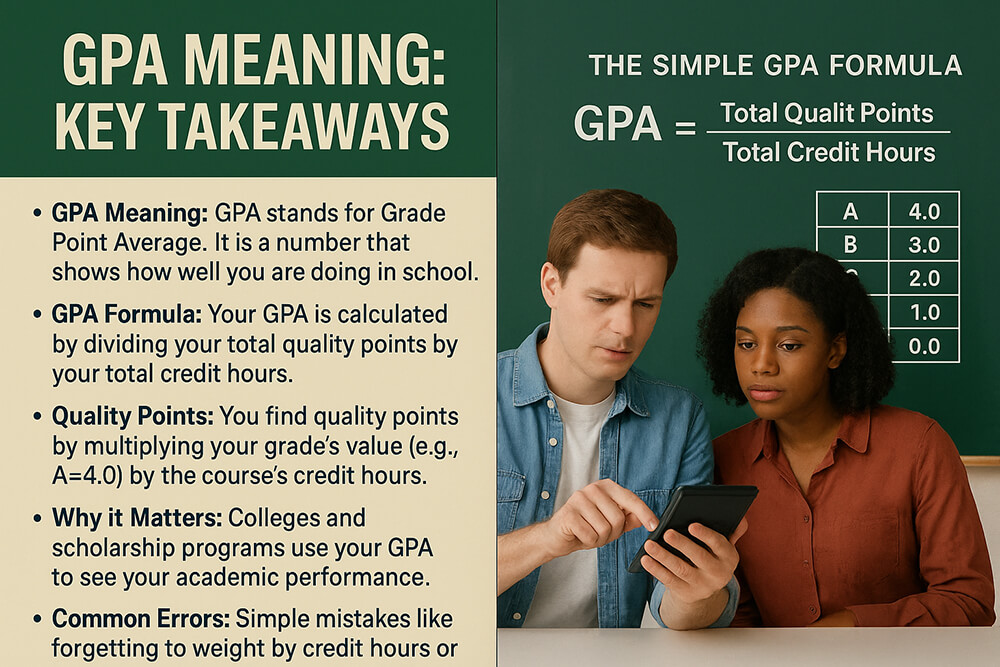
The GPA formula is a way to calculate your GPA. It uses your grades and the credit hours for each class. You can find the formula online.
You can read more about it here: GPA Formula Guide
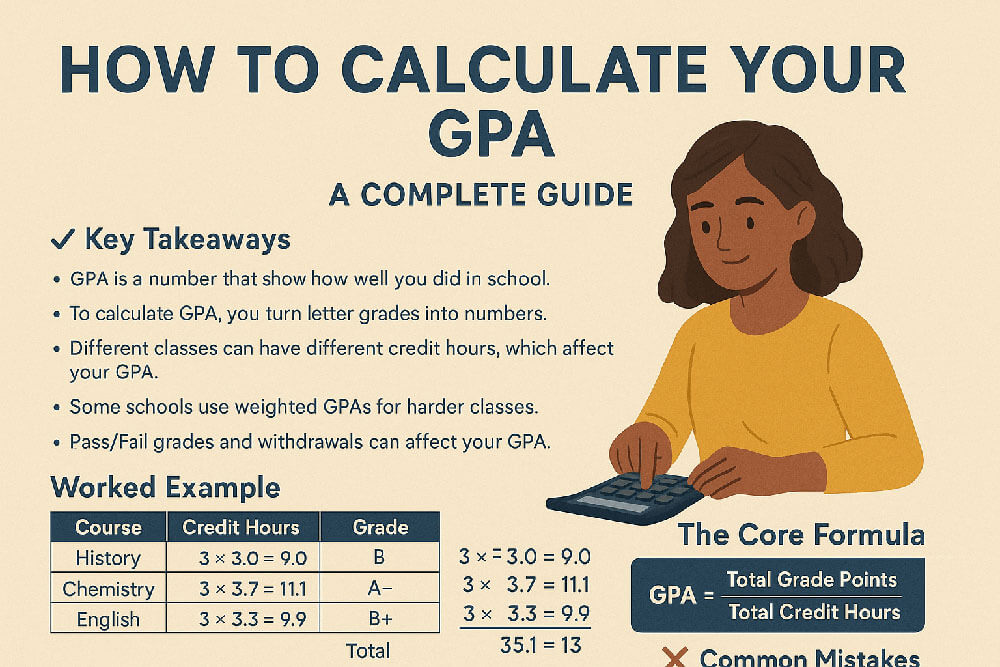
How to Calculate GPA
You can calculate your GPA by following these steps:
- Turn your letter grades into numbers.
- Multiply each number by the credit hours for the class.
- Add up all the numbers.
- Divide by the total number of credit hours.
You can read more about it here: How to Calculate GPA
GPA Weighting: Honors and AP
Some schools add weight for designated Honors or AP classes, while others cap or recalculate that weight. Apply only the published rule for the GPA you are calculating.
You can read more about it here: GPA Weighting Guide Honors AP
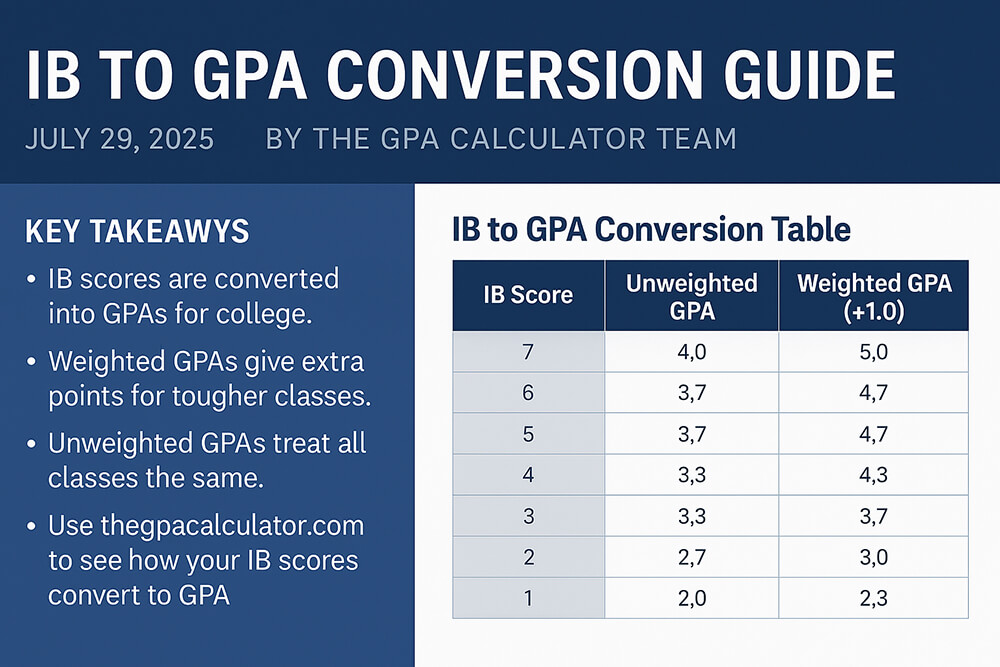
IB to GPA Conversion
IB scores do not have one universal GPA conversion. Use the receiving institution's policy or a recognized credential evaluator.
You can read more about it here: IB to GPA Conversion Guide
How School Districts Calculate GPA
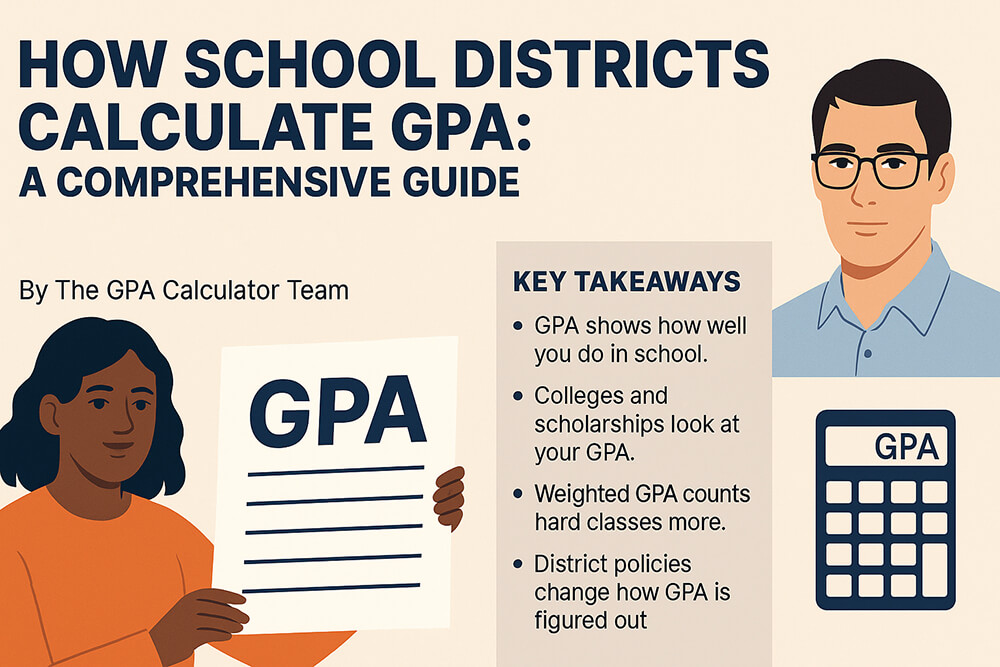
Different school districts might calculate GPA in different ways. Some might use a different scale. Some might weight classes differently. Make sure you know how your school does it.
You can read more about it here: How School Districts Calculate GPA
Frequently Asked Questions (FAQ)
Q: What is GPA inflation?
A: GPA inflation describes an upward change in reported grades over time that is not fully explained by a measured change in academic performance. The definition and evidence depend on the dataset.
Q: What is GPA deflation?
A: GPA deflation describes a downward grading trend in a defined dataset. It should not be inferred from one course or one student's record.
Q: What is a weighted GPA?
A: A weighted GPA gives more points for hard classes. This shows colleges that you took challenging courses.
Q: How can The GPA Calculator help me?
A: The GPA Calculator has tools to calculate your GPA. It can help you understand your grades.