
| Key Takeaways | What to remember |
|---|---|
| Unweighted GPA stays on a 0.0–4.0 scale | Class level does not change points. |
| Letter grades convert to points | A = 4.0, B = 3.0, C = 2.0, D = 1.0, F = 0.0 in most charts. |
| Plus/minus can change decimals | A− often = 3.7, B+ often = 3.3, but your school may differ. |
| Credits matter in real GPA math | Most systems multiply points × credits, then divide by total credits. |
| You can’t go above 4.0 unweighted | Any GPA above 4.0 is weighted or a different scale. |
| Schools and colleges may recalc | Your transcript GPA can differ from an admissions GPA. |
Unweighted GPA Conversion Chart (Letter → 4.0)
What an unweighted GPA conversion chart means
An unweighted GPA conversion chart (Letter → 4.0) turns each letter grade into a number on a 0.0–4.0 scale. The key rule stays simple: an A in AP Calculus and an A in regular English both count as 4.0 in an unweighted system. That is why many students use unweighted GPA as the “baseline” number they share in apps, emails, and forms.
This chart helps in three common cases:
- Your school shows letter grades, but you need a 4.0 GPA for a form.
- You want to check your number fast with an unweighted GPA calculator.
- You want to compare two semesters without mixing in course level points.
If you also track weighted GPA, keep them separate so you do not mix scales. A side-by-side view makes this easier in a weighted vs unweighted GPA explainer like weighted vs unweighted GPA explained and an unweighted GPA calculator guide like unweighted GPA calculator 4.0 guide.
Classic letter grade to 4.0 conversion chart (plus/minus)
Most “classic” unweighted charts look the same. Schools may shift the percent bands, but the points often match this pattern. If your transcript shows plus/minus grades, use the closest row.
| Letter grade | Typical percent band | Unweighted points |
|---|---|---|
| A+/A | 93–100% | 4.0 |
| A− | 90–92% | 3.7 |
| B+ | 87–89% | 3.3 |
| B | 83–86% | 3.0 |
| B− | 80–82% | 2.7 |
| C+ | 77–79% | 2.3 |
| C | 73–76% | 2.0 |
| C− | 70–72% | 1.7 |
| D+ | 67–69% | 1.3 |
| D | 65–66% (or 60–66%) | 1.0 |
| F | below 65% (or below 60%) | 0.0 |
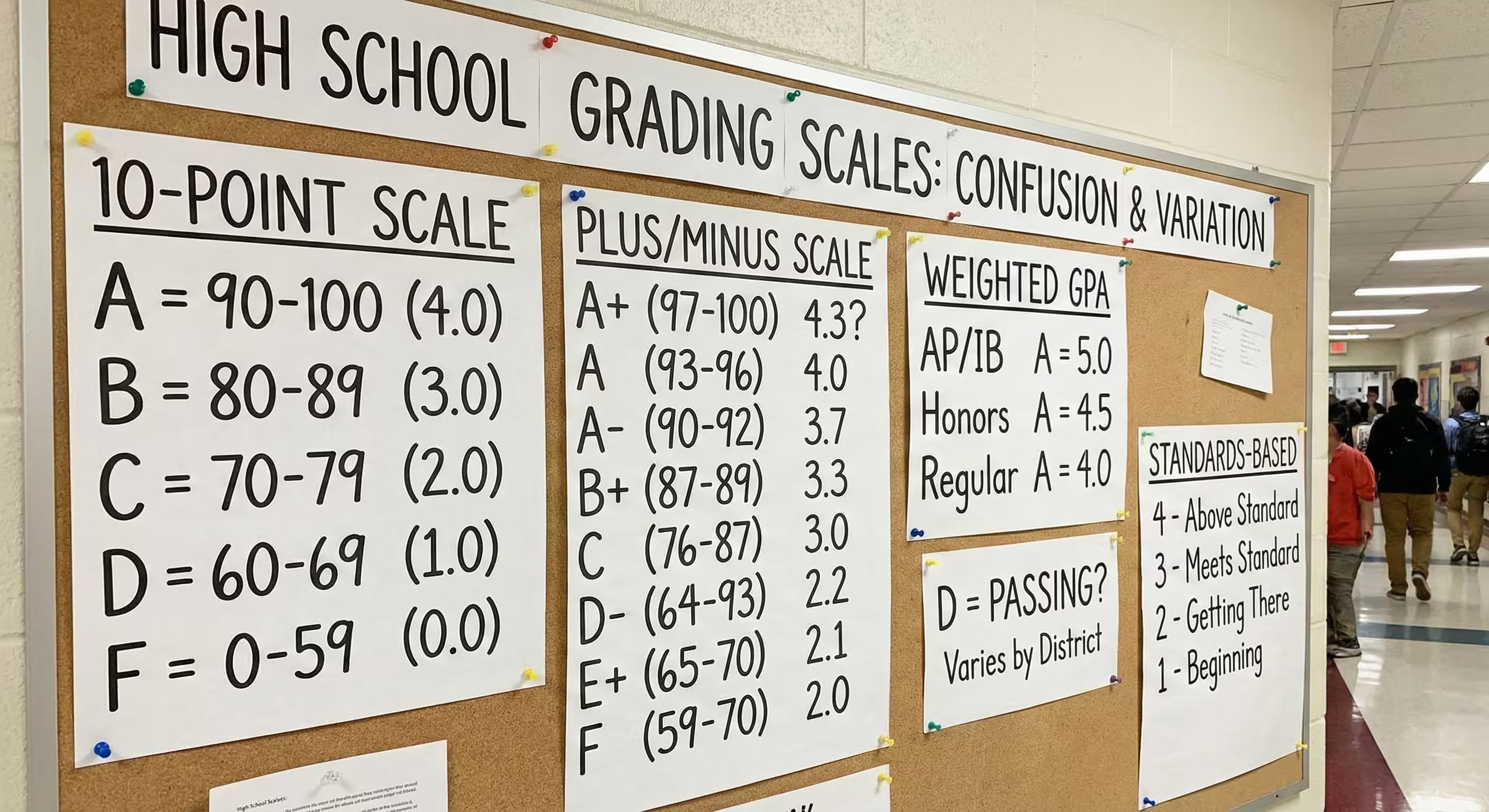
For a deeper breakdown of letter-to-point rules, use letter to point GPA conversion guide.
Why percent cutoffs can change the same letter grade result
A conversion chart can feel “wrong” when you compare schools. One school may set A− as 90–92, while another may label 93 as an A but still show a different cutoff for A−. The points can stay the same, yet the letters shift.
Common reasons:
- District rules set percent bands across all high schools.
- Teachers use different rubrics for rounding and grade bins.
- Some schools show A+ but still cap it at 4.0 on unweighted GPA.
This is why two students can both say “I have a 4.0,” but their gradebooks look different. If your GPA does not match what you expect, it often comes from local rules, not math errors. Two helpful checks are: how your district sets cutoffs and how your transcript reports GPA. Use how school districts calculate GPA and why GPA does not match transcript to spot the source fast.
How to calculate unweighted GPA using credits and quality points
Many students think unweighted GPA means “average the letters.” Some schools do that, but many use a credit-based method.
Use this standard process:
- Convert each letter grade to points with the unweighted chart.
- Multiply points × course credits to get quality points.
- Add all quality points.
- Divide by total credits attempted.
This matters most when classes have different credit values (labs, year-long classes, dual enrollment). If you want a clean walk-through of the math idea, the concept is the same as credit hour weighting GPA guide.

To run the numbers in seconds, use the cumulative GPA calculator.
Unweighted GPA examples that match real report cards
Examples make the chart feel real. Here are two common setups that show how the math works.
Example 1 (same credits):
- Grades: A, A, B, B, B
- Points: 4.0, 4.0, 3.0, 3.0, 3.0
- GPA: (4+4+3+3+3) ÷ 5 = 3.4
Example 2 (different credits):
- English (1.0 credit) = A (4.0) → 4.0 quality points
- Lab Science (1.0 credit) = B+ (3.3) → 3.3 quality points
- PE (0.5 credit) = A− (3.7) → 1.85 quality points
- Total quality points = 9.15; total credits = 2.5
- GPA = 9.15 ÷ 2.5 = 3.66

If you want the full formula in one place, see how to calculate GPA.
A+, A, and A− on an unweighted 4.0 scale
Students ask this a lot: “Does A+ give 4.3?” In most unweighted systems, no. Many schools show A+ on the transcript, but they still set A+ = 4.0 for unweighted GPA. That keeps the scale capped.
Plus/minus rules often look like this:
- A+/A = 4.0
- A− = 3.7
- B+ = 3.3
- B− = 2.7
Some schools do not use plus/minus at all. In that case, an A range might be one big band (like 90–100) that always maps to 4.0. If you want a quick way to “see” how plus/minus shifts points across a full grade set, a visual tool like letter grade heat map makes the pattern easy.

What counts in unweighted GPA: core classes vs electives
A conversion chart tells you the points, but it does not tell you which classes your school counts. Many schools compute multiple GPAs: an overall GPA and a core-only GPA.
Typical core set:
- English
- Math
- Science
- Social studies
- World language
Electives can be included, excluded, or placed in a separate “elective GPA.” This is why two students at the same school can report different GPAs based on what the form asks for.
If you want to check what your school likely does, start by sorting your transcript into “core” and “elective,” then compute two numbers. This also helps if a college later recalculates your GPA and focuses on core work. Use core vs elective GPA and what counts in unweighted GPA to make the split clear.

Unweighted vs weighted GPA: same grades, different story
Unweighted GPA answers one question: “How strong are the grades?” Weighted GPA adds a second question: “How hard were the classes?” That is why a student can have 3.8 unweighted but 4.4 weighted.
Here is the clean rule:
- Unweighted: A is 4.0 in every class.
- Weighted: A in Honors/AP/IB may add extra points, so the GPA can go above 4.0.
If your school reports both, list both the same way many students do: “X unweighted / Y weighted.” It avoids confusion and keeps your scale honest. If you want to compare the two with the same set of grades, use a guide like weighted vs unweighted GPA guide.

To calculate both side-by-side, try a weighted vs unweighted GPA calculator.
Converting a percentage average to a 4.0 unweighted GPA
A percent average (like 93.6%) is not the same thing as a GPA. A GPA uses course-by-course conversion, then averages points. If you convert percent to GPA by “divide by 25,” you can get a number, but it can be wrong for your school.
A safer approach:
- If you have letter grades, use the chart and compute GPA by credits.
- If you only have percents, convert each class percent to a letter grade using your school’s bands, then use the chart.
- If your transcript lists both percent and letter, trust the transcript letters first.

If you need a step-by-step method, use percentage to 4.0 GPA conversion. If you want to go the other direction, use GPA to percent reverse calculator.
Common unweighted GPA calculation errors to avoid
Small mistakes can move your GPA by a lot, especially with plus/minus and mixed credits.
Watch for these issues:
- A+ counted above 4.0 in an “unweighted” number
- Credits ignored when classes have different weight by time or units
- Wrong scale mixed in, like a 5.0 scale chart used for a 4.0 report
- Pass/fail counted as letters when your school excludes them
- Dropped classes included even if your transcript marks them as withdrawn
A quick fix is to do a transcript audit: list each course, the credits, the letter grade, the points, and the quality points. Then check totals.
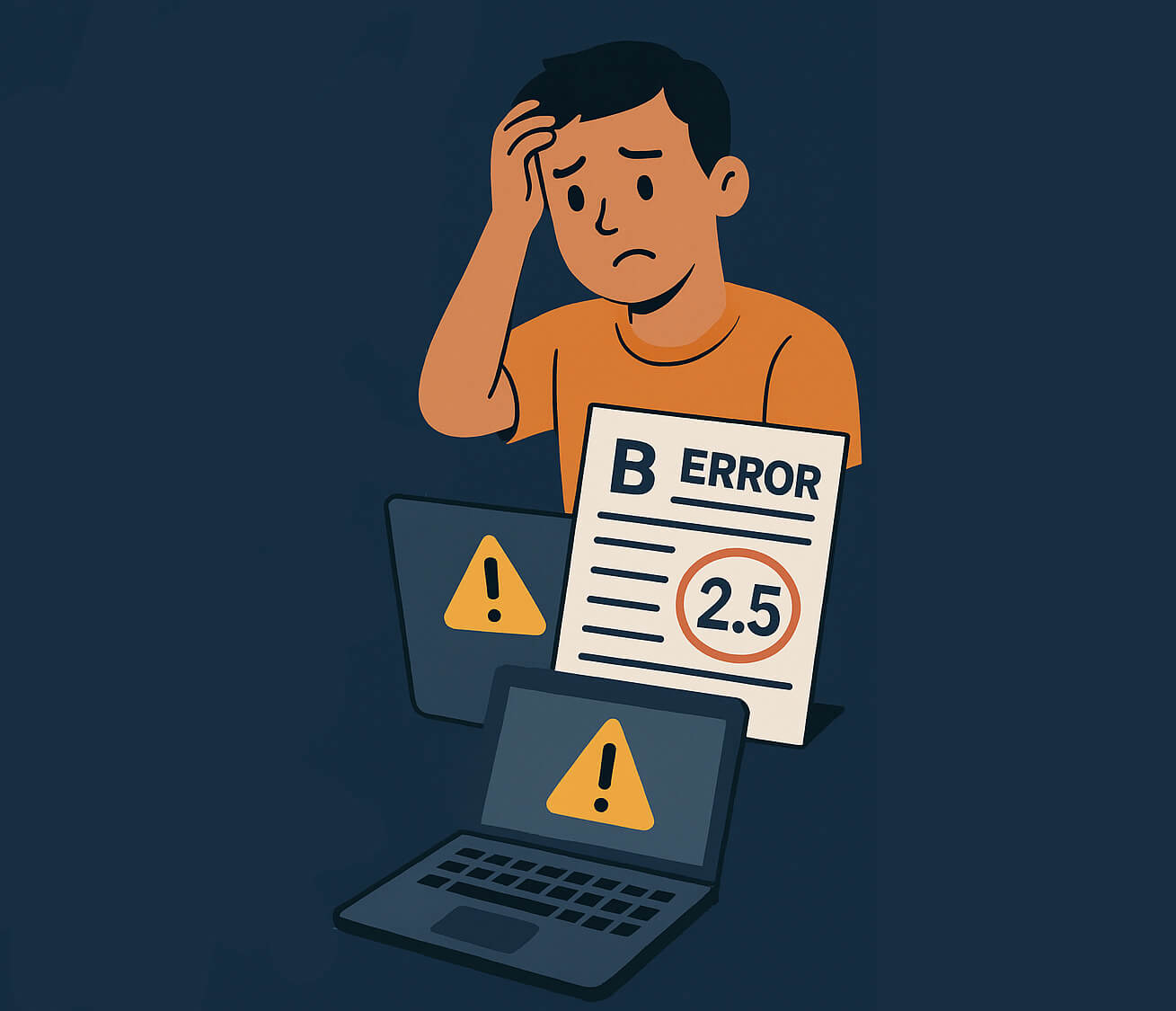
For a clean checklist, use common GPA calculation errors to avoid and confirm the math with GPA formula guide.
How colleges may recalculate your unweighted GPA for admissions
Colleges often recalculate GPA so they can compare students across many schools. They may:
- Focus on core classes only
- Re-map grades into their own letter-to-point system
- Handle repeated courses or grade replacement differently
- Review both unweighted and weighted in context of course rigor
This is why your school GPA and your admissions GPA can differ, even if your math is correct. A smart move is to keep a “clean” record of your courses and grades so you can answer questions fast on apps.

If you want a simple process for checking your record, use transcript GPA audit guide. If you need context for minimum GPA lines on apps, see GPA requirements for college admissions.
Frequently Asked Questions (FAQ)
What is the simplest unweighted GPA conversion chart?
Most students use the classic mapping: A=4.0, B=3.0, C=2.0, D=1.0, F=0.0, with decimals for plus/minus. If your school prints a chart in the handbook, use that version first. A quick reference page is GPA conversion charts and tools.
Can an unweighted GPA be higher than 4.0?
No. Unweighted GPA caps at 4.0. If you see 4.2, that number uses weighting or another scale like 5.0 or 6.0. If you are unsure which scale you have, check 4.0 vs 5.0 vs 6.0 GPA scales.
Does pass/fail affect my unweighted GPA?
Often, pass/fail does not change GPA, but rules vary. Some schools mark pass as credit with no points, and some treat fail as 0.0. Always confirm your transcript legend.

A full breakdown is in unweighted GPA pass/fail impact.
Which calculator should I use for unweighted GPA?
If you want a fast number for a full record, use the high school GPA calculator for high school classes or the cumulative GPA calculator for multi-term totals. If you want a guide with examples, use unweighted GPA calculator 4.0 scale.
Why does my GPA not match what my friend gets with the same grades?
Schools can differ in percent bands, plus/minus rules, and which classes count. Even two teachers can set different cutoff bins for the same letter in some systems. A good troubleshooting start is why GPA does not match transcript.
How do I handle semesters, quarters, or trimesters?
You still convert letters to points, then weight by credits. The main change is how the school defines a “credit” for each term type. If you switch term systems, use semester vs quarter vs trimester GPA.
What if my school does not use plus/minus grades?
Then your chart likely uses whole letters only (A, B, C, D, F). That can raise or lower your GPA compared to a plus/minus system. If you need a plus/minus version for another form, use a tool built for it like unweighted GPA plus/minus calculator.
How can I raise my unweighted GPA fastest?
Focus on classes with the most credits and the easiest point jumps (like C to B or B− to B). A steady plan beats last-minute moves.

For practical habits, use study tips for better grades and a planning tool like raise my GPA action plan.