
Key Takeaways

| Topic | Simple takeaway |
|---|---|
| M7 MBA program average GPAs | Most sit around 3.6–3.8, so the class is full of mostly A-level college work. |
| Top-25 MBA programs | Many strong schools sit near 3.4–3.7, with a bit more room for B grades. |
| “Low” GPA for MBAs | A GPA about 0.3 below a school’s average starts to count as low for that program. |
| MS vs MBA vs PhD | Many MS and PhD tracks want 3.5+, and top STEM PhDs often prefer 3.7–3.8+. |
| Second-chance routes | Conditional admission, grade repair, and strong test scores can keep a dream school open. |
| Tools you can use | The GPA calculators and planners on this site show if your scores match MBA program average GPAs. |
MBA Program Average GPAs: Quick Score Map

For the most selective MBA schools, a common GPA target sits between 3.6 and 3.8. M7 programs like Stanford, Harvard, Wharton, Booth, Kellogg, MIT Sloan, and Columbia live in that band. That range means most students earned steady A work as undergrads. Strong top-25 MBA programs often sit a bit lower, in the 3.3 to 3.6 area, which gives room for more B grades. The idea of a “low” GPA is local. A 3.3 feels fine at a school where the average is 3.4, but it feels weak where the average is 3.8. Tools such as the GPA requirements for college admissions guide and the flagship university GPA requirements chart help you see how your score sits next to common cutoffs.

MBA targets also line up with common honors rules. The dean’s list thresholds chart, the dean’s list eligibility checker, and the graduation honors GPA requirements guide show that many honors cutoffs hover near the same level as MBA program average GPAs at strong schools.
Check Your Current GPA Against MBA Program Average GPAs

Before you worry about M7 or top-25 averages, you need a clean, correct number for your own GPA. Start with the main tool at The GPA Calculator home page. Then use the college GPA calculator to plug in each course, credit hour, and letter grade. If you want a tighter view of one term, the semester GPA calculator helps you track a single block, while the multi-semester GPA bulk import tool lets you feed in many terms at once. For a long-view check, combine that with the cumulative GPA calculator or even the typo twin URL at /blog/cumulative-gpa-calculato if it lives in your system.
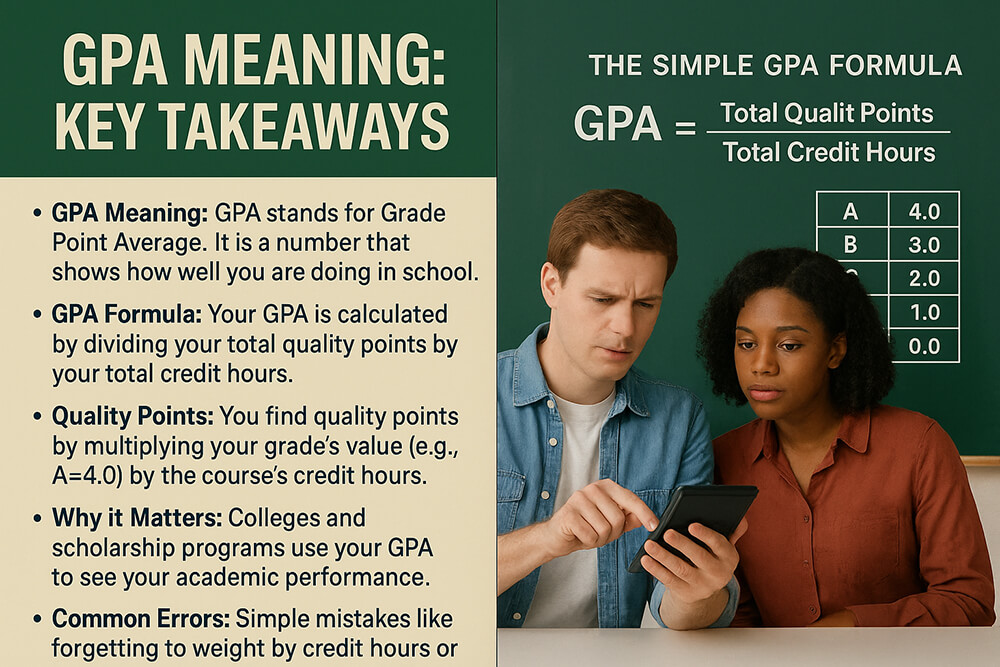
If numbers confuse you, run through the GPA formula guide and the how to calculate GPA walkthrough. They break GPA into simple steps with quality points vs GPA explained and show how credit-hour weighting changes the final number. Use the mid-term grade projection slider to see if your current course scores will pull you closer to MBA program average GPAs by the end of the term.
GPA Scales And Conversions For MBA Program Average GPAs
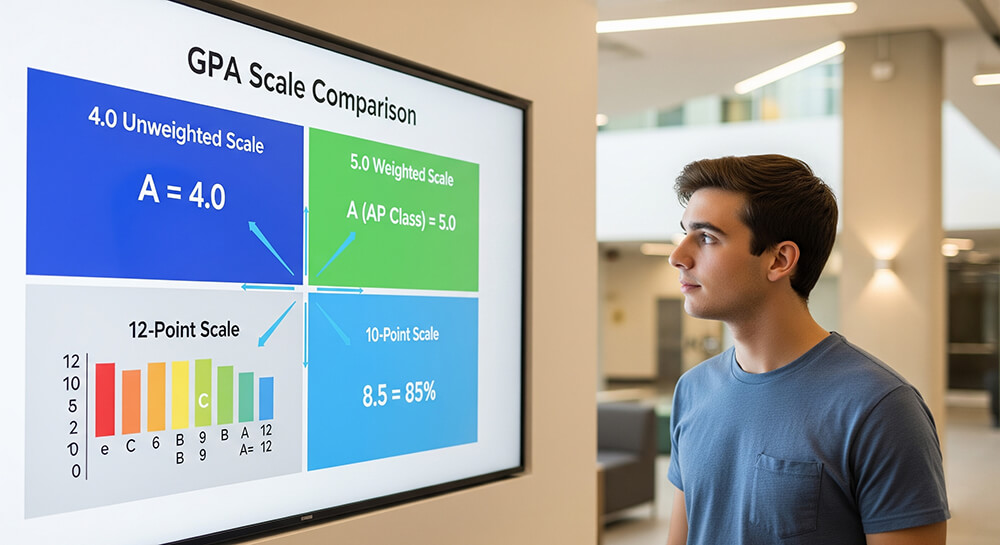
Many MBA hopefuls ask if their score “counts” as strong when it sits on a different scale. A 3.6 on a 4.0 scale matches common M7 targets, but what about a 90 on a 100-point scale or a 4.3 on a 5.0 scale? Start with the GPA scale comparison guide, the types of GPA scales overview, and the pros and cons of GPA scales. These explain why schools use different ladders. Then use the percentage to 4.0 GPA conversion and 12-point to 4-point scale chart to map local marks to the 4.0 scale many MBA programs quote.
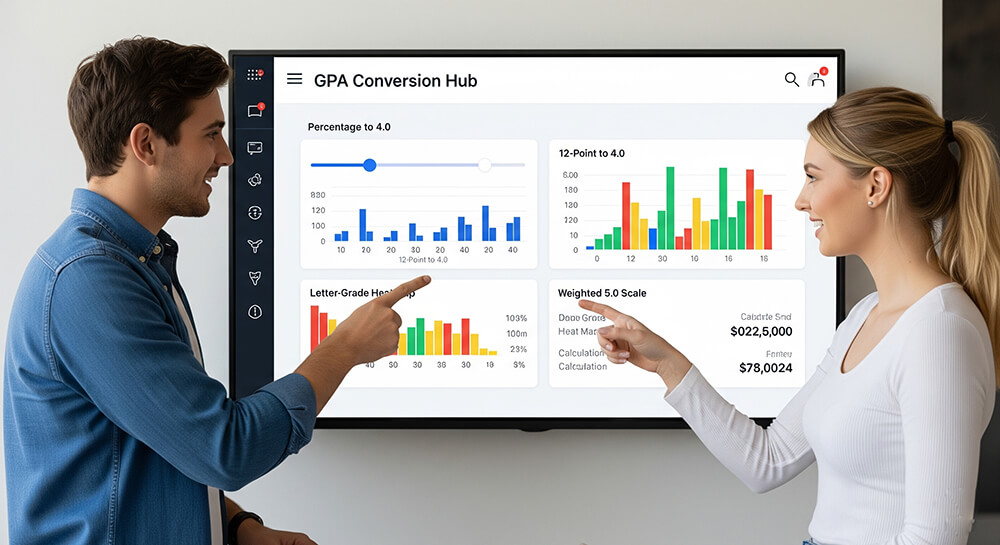
Fine-tune this with tools like the letter grade heat map, the GPA to percent reverse calculator, the 100-point to 5-point conversion guide, and the 4.0 vs 5.0 GPA outcome simulator. The 12-point vs 10-point conversion, the 5.0 GPA scale guide, and the letter to point GPA conversion guide help students from older or local systems. For context lovers, the history of GPA explains how these scales grew over time.
GPA Trends, Last 60 Credits, And Core vs Elective For MBA Admissions

MBA programs rarely read one single number. They read a story. The GPA trend graph generator helps you show if your grades go up, down, or stay flat. A rising line after a rough start often feels better than a flat, lower line. Many schools also look hard at the last 60 credits GPA calculator, since this part of your transcript comes closest to graduate-level work. When I coach applicants, I ask them to print that last-60 graph and place it next to the school’s average GPA to see if the “recent you” fits the target.

Use the core vs elective GPA tool and the prerequisite-only GPA calculator to show strength in key business or STEM courses. The major change GPA impact tool and the transcript GPA audit guide help you explain messy paths, such as switching from art to engineering. If your school has grade growth over time, the GPA inflation vs deflation explainer, the weighted GPA myths debunked guide, and the weighted vs unweighted GPA calculator can help frame your numbers.
Study Habits That Help You Reach MBA Program Average GPAs

MBA-level GPAs grow day by day, not in one big jump. Simple study routines beat long cram sessions. The study tips for better grades guide breaks big tasks into small steps you can repeat each week. The study habit audit checklist helps you spot weak spots like late-night phone use or poor note-taking. You can run your calendar through the time management templates for GPA to see where to put deep work blocks that protect grades.

The GPA goal setting worksheet guide lets you set a target, like “3.5 in the next two terms,” and then break it into course-level aims. Many students I work with also use the raise my GPA action plan and the credit recovery course finder to map one or two smart grade-repair moves. For bigger changes, the grade replacement ROI calculator shows if retaking a class helps enough to push you closer to common MBA program average GPAs.
Fixing Past Grades Before You Apply To MBA Programs

Old grades do not control your future, but they do sit on your record. The repeat course GPA recalculator shows how retaking a key class can raise your average. Paired with the quirky but useful drop lowest grade analyzer, you can see how much a single “F” or “D” drags down your score. I once helped a student move from a 2.8 to a 3.2 by retaking just two high-credit math classes and dropping one low elective from a transfer record.
Clean math matters. The common GPA calculation errors to avoid guide helps you catch simple mistakes that can hide a small GPA bump. The how pass/fail grades impact your GPA explainer shows when a pass can hide a low grade and when it leaves the average untouched. For deeper clean-up, mix in the credit recovery course finder, the multi-semester bulk import tool, and the semester GPA calculator so you see how each fix pulls your record closer to MBA program average GPAs at target schools.
Special Grading Rules: Pass/Fail, Incomplete, Study Abroad, And Dual Degrees

Life happens. Illness, family duty, or work can interrupt a term. Many applicants carry “I” or pass/fail marks. The GPA planning for incomplete grades guide and the incomplete grades scenario planner help you model best and worst outcomes once those marks turn into letters. The how pass/fail grades impact your GPA explainer shows when pass/fail helps protect the average and when it hides useful proof of hard work.

Global and split programs add more moving parts. The study abroad grades GPA integrator and the transfer credits GPA integrator help you merge outside grades with your home record. If you hold two majors or a joint program, the dual degree GPA splitter and the core vs elective GPA tool show which courses line up with business school skills. The prerequisite-only GPA calculator lets you highlight proof in stats, calculus, or accounting when you aim at MBA, MS, or data-heavy tracks with higher GPA bars.
Pathways From High School And Community College To MBA-Level GPAs

Future MBA students often start planning long before senior year of college. The high school GPA calculator and the freshman year GPA predictor show early patterns. If your school runs three terms, the trimester GPA calculator keeps things straight. The how school districts calculate GPA guide and the GPA weighting guide for honors and AP explain why some 4.3 and 4.5 scores still map to the same 3.8-level work that top MBA programs expect.

Many strong MBA students start in community college. The community college transfer GPA guide and the transfer credits GPA integrator help plan a clean move to a four-year campus. From there, the flagship university GPA requirements guide and the study abroad grades integrator keep records aligned with future business school targets. For global programs, the IB to GPA conversion guide, the 5.0 GPA scale guide, and the weighted vs unweighted GPA explainer show how advanced high-school work maps into college-level strength that later supports MBA program average GPAs.
International Students: Converting GPAs For Global MBA Programs

If your grades come from outside the US, the numbers can feel confusing. Many MBA schools still ask for a 4.0-scale GPA, even when your transcript does not use one. The international GPA converter guide gives a clear path. Country-specific tools such as the Indian 10-point to 4.0 conversion, the UK class system to GPA converter, and the Ontario 12-point to 4.0 guide help you speak the same language as schools in North America.

Students from China can use the China 100-point to 4.0 scale conversion guide. Students from Nigeria can use the Nigeria 5-point to US 4.0 scale conversion tool. When in doubt, the GPA conversion charts and tools hub ties these resources together. With a clean converted number, you can see if your score sits near common MBA program average GPAs for your target schools.
Low GPA, Conditional Paths, And Second-Chance Strategies

Many strong MBA students carry a rough term, a low major start, or even academic probation in their past. The academic probation rules by state guide and a student’s guide to satisfactory academic progress explain how schools judge recovery. The reinstatement after academic suspension guide helps you write a clear story about the path back. I once worked with a student who came back from suspension, lifted their GPA to just above 3.0, paired it with a 740 GMAT, and earned a seat at a top-15 MBA.

If your number sits well below common MBA program average GPAs, you still have steps. The credit recovery course finder and grade replacement ROI calculator help you decide which classes to retake. The raise my GPA action plan, study habit audit checklist, and time management templates turn those choices into weekly tasks. On the test side, the test-optional vs GPA thresholds guide shows when a high GMAT or GRE still carries a lot of weight and when schools lean more on GPA.
How MBA Program Average GPAs Compare To MS And PhD Targets

MBA programs use GPA as one signal, but many research-heavy MS and PhD paths lean even more on grades. In fields such as computer science, engineering, and data science, many top programs want 3.5 or higher, and elite PhD tracks often look for 3.7–3.8+. To see if your record fits that kind of bar, start with the prerequisite-only GPA calculator, which isolates math, stats, and other core subjects that matter for MS and PhD work. The core vs elective GPA tool and the major change GPA impact tool help you separate early exploration from later focused work in your chosen field.
Use the last 60 credits GPA calculator to show a recent record that matches MS or PhD norms, even if your full college GPA sits lower. The semester GPA calculator and college GPA calculator keep each term on track. When I advise students, I often suggest they raise their core-field GPA to at least the level of average MBA program GPAs at strong business schools, then push a bit higher for MS or PhD programs that sit at the top of their field.
Frequently Asked Questions About MBA Program Average GPAs

What GPA do I need for a top MBA?
For M7 schools, try to sit near 3.6–3.8. For other top-25 MBAs, many strong admits sit between 3.3 and 3.6. Use the GPA scale comparison guide and the college GPA calculator to see where your score sits on a 4.0 scale, then compare it with each school’s class profile.
Is a 3.0 GPA good enough for an MBA?
A 3.0 can still work, especially outside the M7. Some schools with averages around 3.4 admit students a bit under that mark when test scores, work history, and essays shine. Read the GPA requirements for college admissions overview and the flagship university GPA requirements guide to get a feel for how schools treat “borderline” scores.
How low is “too low” for MBA admissions?
Many admissions teams start to see a GPA as low when it sits about 0.3 points under their class average. So if a school lists 3.6, a 3.3 will raise concern, and a 2.8 will need very strong support from tests, work, and a clear story. Use the GPA trend graph generator and last-60 credits calculator to prove growth.
Can I still get into a good MBA with a low GPA?
Yes. Many real cases on Reddit show people with 2.4–2.9 GPAs who reached top-15 MBAs with high GMAT or GRE scores, strong work history, and honest essays. Tools like the credit recovery course finder, grade replacement ROI calculator, raise my GPA action plan, and test-optional vs GPA thresholds guide help you plan your best path.
How do MS and PhD GPA expectations compare with MBA program average GPAs?
Many MBA programs stay happy around 3.3–3.7, but top MS and PhD tracks often want 3.5+, and elite STEM PhDs often like 3.7–3.8+. Use the prerequisite-only GPA calculator and core vs elective GPA tool to show that your key courses already sit at that level.
How can I see if my international GPA matches US MBA targets?
Start with the international GPA converter guide and then use the India, UK, Ontario, China, or Nigeria-specific pages such as the India 10-point converter and the Nigeria 5-point to US 4-point tool. These tools help you see if your number matches common MBA program average GPAs on a 4.0 scale.
How can I keep my GPA on track once I start raising it?
Mix care and tools. Use the study tips for better grades guide, study habit audit checklist, and time management templates to build steady habits. Track each term with the semester GPA calculator and long-term changes with the cumulative GPA calculator so your record moves closer to the MBA program average GPAs you want.