
| Key takeaway | What it means for PhD Admission GPA Cutoffs |
|---|---|
| Most PhDs list 3.0 minimum | 3.0 is often a screening floor, not a strong target for top programs. |
| “Stated” vs “competitive” GPA can be far apart | Top tiers may say 3.0, but many admits sit closer to 3.6–4.0. |
| After you clear the floor, research matters more than tiny GPA bumps | Past about 3.3–3.5, research, letters, and faculty fit often drive decisions. |
| Field changes the cutoff | CS/ML and some physics tracks run higher; humanities often run lower. |
| A master’s can “reset” the story | A strong graduate GPA can replace doubts from a weak undergrad record. |
PhD Admission GPA Cutoffs: stated vs real-world ranges
PhD Admission GPA Cutoffs usually start with a stated minimum, often 3.0. That number can hide the real range. Many programs use it to filter, then shift focus to research proof. Some fields also run tighter filters than others.
A simple benchmark table helps:
| Tier | Stated minimum | Competitive band | Typical admitted average |
|---|---|---|---|
| Top-5 | 3.0 | 3.8–4.0 | ~3.85+ |
| Top-20 | 3.0 | 3.6–3.8 | ~3.7 |
| Top-50 | 3.0 | 3.4–3.6 | ~3.5 |
| Mid-tier R1 | 3.0 | 3.3–3.5 | ~3.4 |
| Regional | 3.0–3.2 | 3.1–3.3 | ~3.2 |

If your GPA math is messy, start with a clean reset: how to calculate GPA.
The 3.0 minimum: a hard floor that triggers auto-screens
Many graduate schools set a policy minimum. That policy often sits at 3.0. Some departments also use unofficial soft screens like 3.3. The reason is simple. Departments get many applications, so they need quick filters.
If you are near the floor, a small GPA error can change your result. A wrong credit weight, missing repeat policy, or misread transcript can drop you below a cutoff. A fast check helps: common GPA calculation errors to avoid.

If your school uses quality points, learn how they connect to the final number: quality points vs GPA explained.
Top-tier programs: why “3.0 minimum” does not mean “3.0 works”
Top programs often keep the same minimum as everyone else, but the real bar is higher. Many admitted students sit at 3.8+. That does not mean a 3.3 never gets in. It means a 3.3 usually needs rare strengths, like strong publications or a faculty sponsor who wants you.
Faculty fit matters more at this tier because labs have limited funded seats. If a professor already sees you as a match, GPA can stop being the main story after you pass the floor. If no professor wants you, even a 4.0 may not save you.

If you are choosing between a master’s and a PhD path, check MS engineering GPA ranges and MS engineering GPA requirements.
The “3.3–3.5” zone: where the file must carry you
Many applicants land in the 3.3–3.5 range. This range can be workable for many R1 programs, but it often needs support. Programs ask, “What proof shows this person can do research and finish?”
Strong support can look like:
- A research thesis, poster, or paper
- A letter from a research advisor with specific praise
- A clear match to one lab or method
- A strong recent GPA trend
If your overall GPA is held down by early semesters, show the turn. Many programs care about recent courses or major courses. Tools that show the pattern help: GPA trend graph generator.

A fast way to explain the math behind “trend” is credit hour weighting GPA guide.
The “3.0–3.3” zone: possible, but you need clear compensators
PhD Admission GPA Cutoffs feel toughest in this band because you sit near soft screens. This is the zone where research can fully change outcomes. A strong letter can act like a key. It tells the committee: “I have seen this person do real research work.”
Common compensators include:
- Publications or strong research outputs
- Faculty contact before applying
- Strong master’s grades (if you have them)
- Industry work that connects to the research
If you have incomplete grades or delayed marks, fix them early. A missing grade can harm your file at the worst moment. Planning helps: GPA planning for incomplete grades.

If pass/fail sits on your transcript, know how it changes your GPA story: how pass/fail grades impact your GPA.
Field differences: CS vs physics vs engineering vs humanities
Fields do not treat GPA the same way. Some fields have more applicants per funded seat, so screens get tighter.
- Computer Science (especially ML): Often higher GPA bands, and research outputs can matter even more than GPA.
- Physics: Research fit matters, and some tracks care about strong math grades and evidence you can handle theory.
- Engineering: Industry experience can help more, and applied work can support research potential.
- Humanities: Writing sample and research idea can beat a mid GPA, if the work is strong.
If you are comparing program competitiveness across fields, it helps to anchor on other benchmarks too. For contrast, see medical school GPA averages AMCAS 2024–2025.

Research experience: the point where GPA becomes “good enough”
A common pattern shows up across programs. Once the GPA passes the minimum and looks stable, research proof takes over. Committees often trust what a research supervisor says more than a tiny GPA change like 3.58 vs 3.62.
Research proof can be small. It can be a well-run lab project, clean code, strong documentation, or a poster. The key is clarity. You should show what you did and how you think.
If your grades are not where you want, do not ignore the basic fixes. Better habits can still lift your last semesters. Use study tips for better grades and study habit audit checklist.

Master’s recovery path: when graduate GPA can replace undergrad doubt
A master’s can act like a second transcript. If you earn a strong graduate GPA, it gives a new signal. Many PhD committees weigh graduate coursework heavily because it better matches the level they expect.
A simple idea works here: a strong master’s record can turn “low undergrad GPA” into “ready for PhD.” It can also create better letters, since you spend more time with faculty.
Before you pick this path, run numbers and timelines. Use college GPA calculator to model your current GPA, then plan the next term carefully.

If you need to evaluate repeating key courses, check repeat course GPA recalculator.
International applicants: GPA conversion and uncertainty
International applicants face two extra issues: conversion and comparability. A 7.5/10 can land differently depending on the school’s method. This can add uncertainty, which pushes committees to rely more on research, letters, and clear evidence of skills.
If you are converting from a national system, use a clear reference point and be consistent across applications. Start with international GPA converter guide. If you use a specific system, use the matching guide, like China 100-point GPA to 4.0 conversion guide.

If you are converting from another scale, these can help: UK class system to 4.0 GPA conversion and Indian 10-point GPA to 4.0 conversion.
Practical cutoffs that show up again and again
Even without official rules, some thresholds appear often:
- 3.0: common policy minimum
- 3.3: common soft screen at many R1 schools
- 3.5: often “GPA stops being the problem” for many strong programs
- 3.7+: common expectation for very competitive tiers
Your goal is not to hit a magic number. Your goal is to build a file that answers the PhD question: “Will this person produce research and finish?”
To avoid small mistakes, run a clean check on your transcript and your formula: GPA formula guide.
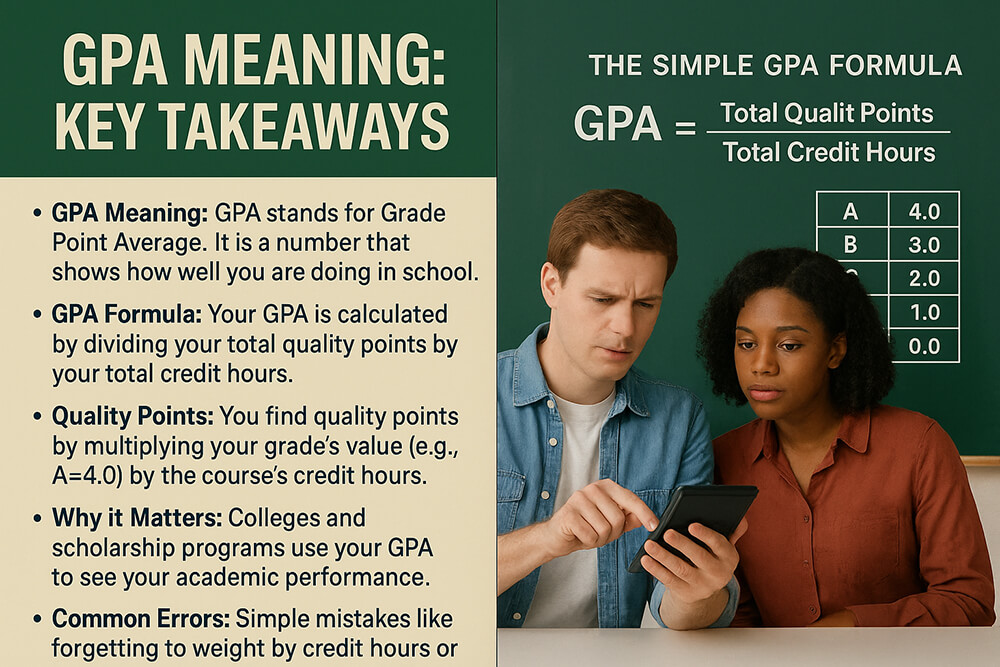
If you need fast conversion from letters, use letter to point GPA conversion guide.
A simple planning system for applicants at each GPA band
Use a plan that matches your band:
- 3.7+ GPA: focus on lab fit, advisor match, and strong letters.
- 3.5–3.6 GPA: add research depth, tighten your statement, and contact faculty.
- 3.3–3.5 GPA: make research proof clear, show trend, and build a balanced list.
- 3.0–3.3 GPA: lean on strong letters, direct faculty interest, and consider a master’s path.
If you need a clear weekly system to protect your grades and research time, use time management templates for GPA and raise my GPA action plan.

For a broad baseline on what schools expect, compare with GPA requirements for college admissions.
Frequently Asked Questions
What is the minimum GPA for PhD programs in the U.S.? Many programs state 3.0 as a minimum, but some schools and fields use higher soft screens. A transcript check helps avoid mistakes: transcript GPA audit guide.
Can I get into a top PhD program with a 3.2 GPA? It can happen, but it usually requires strong research proof, strong letters, and clear faculty fit. Some applicants use a master’s to build a stronger record: post-bacc GPA boost strategies.
Is 3.5 a “magic number” for PhD admissions? 3.5 often acts like a point where GPA stops being the main concern for many programs. Research and letters still decide outcomes.
Do PhD programs care more about major GPA or overall GPA? Many committees look at overall GPA, plus math/major courses. Recent performance can matter a lot. Use last 60 credits GPA calculator to show the trend.
Does the GRE matter for PhD admissions? Many programs treat GRE as optional or a basic check. A weak score can hurt more than a strong score helps. If the test is optional, only submit if it supports your story.
How do incomplete grades affect PhD applications? Incomplete grades can delay transcript review and raise questions. Plan early and avoid surprises with GPA planning for incomplete grades.
What if my GPA is below 3.0? A master’s or post-bacc path is a common recovery route. It helps you show a new academic record and earn new letters: post-bacc GPA boost strategies.
How do international GPAs get converted to 4.0? Schools use different methods, so results can vary. Use a consistent reference and be ready to share context: international GPA converter guide.