
Key Takeaways for Post-Bacc GPA Boost Strategies

| Starting GPA | Best Post-Bacc GPA Boost Strategies | Typical time | Main goal |
|---|---|---|---|
| 3.3–3.5 | Light DIY post-bacc + tests | 3–6 months | Prove sharp recent work |
| 3.0–3.29 | DIY post-bacc + some grad courses | 6–12 months | Show steady A-level skill |
| 2.7–2.99 | Large DIY or formal post-bacc + master’s | 12–20 months | Full academic rebuild |
| 2.3–2.69 | Master’s or bridge program | 18–24 months | Prove grad-level strength |
| <2.3 | Master’s almost required | 18–30 months | Reach a fresh base for PhD |

Post-Bacc GPA Boost Strategies do not move your old cumulative number on paper. They build new proof of skill alongside it. Use the GPA requirements for college admissions guide and flagship university GPA requirements chart to see normal cutoffs. Then compare that with the MBA program average GPAs guide, the MS Engineering GPA ranges page, the PhD admission GPA cutoffs guide, and the conditional admission GPA policies guide. All of this sits on the tools at The GPA Calculator home.
Post-Bacc GPA Boost Strategies: Check Your Baseline First

Good Post-Bacc GPA Boost Strategies start with a clean baseline. Use the college GPA calculator to load every course, credit, and grade. The semester GPA calculator and multi-semester GPA bulk import tool save time when you track many terms. Then check long history with the cumulative GPA calculator and the mirror at /blog/cumulative-gpa-calculato.

Grad schools read patterns, not only one number. The last-60-credits GPA calculator often matches the work closest to grad level. The GPA trend graph generator shows if your line slopes up or down. Use the mid-term grade projection slider to see how current terms can shift these views. The gpa-formula guide, how to calculate GPA walkthrough, credit-hour weighting GPA guide, and quality-points vs GPA explained keep the math honest.
GPA Scales, Conversions, And How Post-Bacc Fits On Top
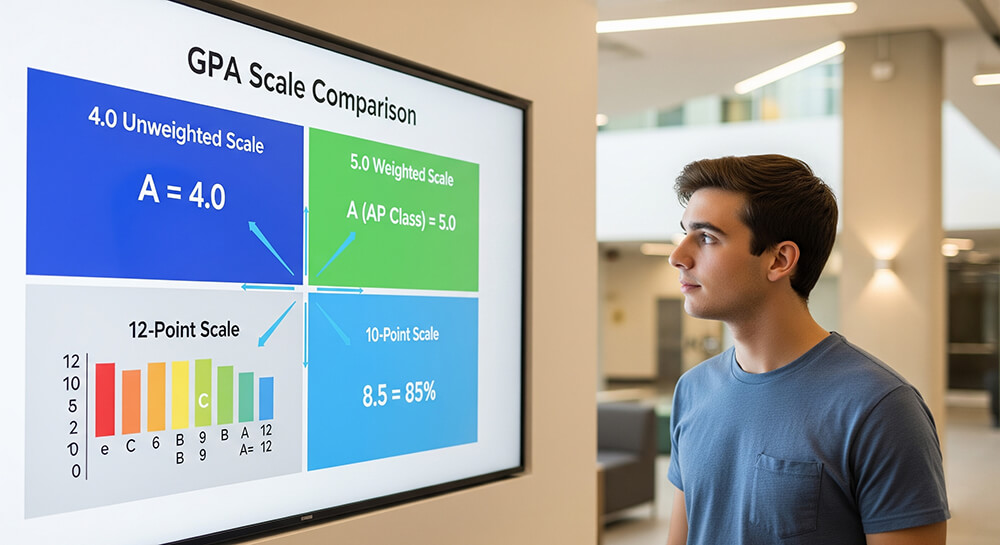
Post-Bacc GPA Boost Strategies always rest on a clear scale. The history of GPA, types of GPA scales, and pros and cons of GPA scales guide explain why a 4.0 band became so common. The gpa-scale comparison guide and 5-0 GPA scale guide help you see how your record matches most grad schools’ rules.
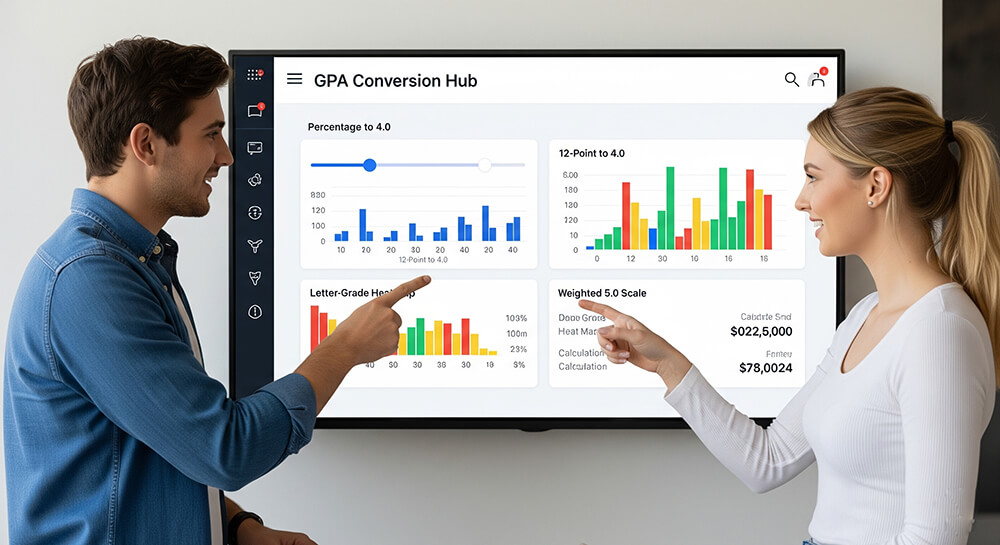
If you work on percent or point scales, you need converters before you build Post-Bacc GPA Boost Strategies. The percentage-to-4.0 GPA conversion page, 12-point-to-4-point scale chart, letter-grade heat map, and GPA-to-percent reverse calculator give that base. The 100-point-to-5-point conversion guide, GPA conversion charts and tools hub, 4-0 vs 5-0 GPA outcome simulator, and 12-point vs 10-point GPA conversion guide support more complex systems.
Post-Bacc GPA Boost Strategies By Starting GPA Band
From the data, Post-Bacc GPA Boost Strategies change as your starting GPA drops. Near 3.3–3.5, you may need just 12–20 credits of strong work plus sharp test scores. At 3.0–3.29, you often need 20–30 new credits to show steady A-level work. The conditional admission GPA policies guide, test-optional vs GPA thresholds page, and flagship university GPA requirements chart show how schools use lines and exceptions.

At 2.7–2.99, strong Post-Bacc GPA Boost Strategies usually mix 40–50 fresh credits plus a terminal master’s or bridge program. Below 2.5, a master’s degree often becomes the real fix. Use the MBA program average GPAs guide, MS Engineering GPA ranges, and PhD admission GPA cutoffs guide to see where your field sits. Place that next to the GPA requirements for college admissions guide for a full map.
Course Choice, Transcript Shape, And Post-Bacc GPA Boost Strategies

Strong Post-Bacc GPA Boost Strategies do more than add credits. They change which grades stand out. The transcript GPA audit guide shows how to read your own record like an advisor. The core vs elective GPA tool and prerequisite-only GPA calculator help you pick classes that prove skill in key areas. The major change GPA impact tool can explain a messy switch between fields.

Many students use more than one campus for Post-Bacc GPA Boost Strategies. The study-abroad grades GPA integrator, transfer-credits GPA integrator, and dual-degree GPA splitter keep records clean when you move. Early in school, the community college transfer GPA guide, high-school GPA calculator, freshman-year GPA predictor, and trimester GPA calculator can cut later repair work.
Fix Old Grades Before Or Along With Post-Bacc Work

I have seen students gain more from smart repair than from extra random credits. The repeat course GPA recalculator shows how a repeat changes your numbers. The drop lowest grade analyzer models policies where a single bad mark drops out. The grade replacement ROI calculator and credit recovery course finder help you choose which course is worth the time and money.
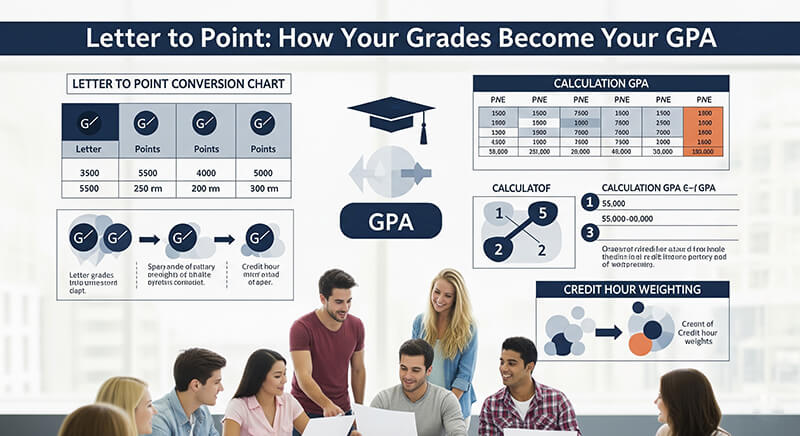
Edge marks matter for Post-Bacc GPA Boost Strategies. The how pass/fail grades impact your GPA guide shows when pass/fail hides proof of skill. The gpa-planning-for-incomplete-grades guide and incomplete-grades scenario planner show how “I” marks turn into real grades. Clean your math with the common GPA calculation errors to avoid guide. For status, read the academic probation rules by state guide, a student’s guide to satisfactory academic progress, and reinstatement after academic suspension.
Daily Study Systems That Make Post-Bacc GPA Boost Strategies Work

Post-Bacc GPA Boost Strategies fail when daily life stays the same. The study-tips for better grades guide gives simple steps you can use in any course. The study-habit audit checklist helps you see where time leaks. I often ask students to change just two habits first, instead of trying to change ten at once.

You also need a clear plan. The GPA goal-setting worksheet guide lets you set term and course targets. The time management templates for GPA and raise my GPA action plan turn those targets into weekly blocks. Track results with the semester GPA calculator and multi-semester GPA bulk import tool. Aim for term GPAs that cross deans list thresholds or match the deans list eligibility checker, then look at graduation honors GPA requirements as long-term marks.
Post-Bacc GPA Boost Strategies For Different Program Goals

Post-Bacc GPA Boost Strategies look different across degrees. For MBA goals, schools often weigh scores and work more than light post-bacc work, as shown in the MBA program average GPAs guide. For MS Engineering, fresh advanced math and tech work matter more, which the MS Engineering GPA ranges page explains. For PhD paths, research and upper-level grades carry the most weight; see the PhD admission GPA cutoffs guide.

Some students use Post-Bacc GPA Boost Strategies to move from denial into a strong conditional offer. The conditional admission GPA policies guide shows how many schools use “yes, with terms” for GPAs near 2.5–2.9. Baselines like flagship university GPA requirements and GPA requirements for college admissions frame those choices. The academic probation rules by state guide reminds you how low you can go before a school forces a break.
International Students And Post-Bacc GPA Boost Strategies

For international students, Post-Bacc GPA Boost Strategies rise or fall on fair conversion. The international GPA converter guide is the main hub. From there, use the indian 10-point GPA to 4.0 conversion guide, the UK class system grades to 4.0 converter, and the Ontario 12-point-to-4.0 conversion guide.

Students from China and Nigeria can use the China 100-point GPA to 4.0 scale conversion guide and the Nigeria 5-point GPA to US 4.0 scale conversion tool. Once you have a 4.0 value, you can line up Post-Bacc GPA Boost Strategies with US-style cutoffs and with tools like percentage-to-4.0 GPA conversion and GPA conversion charts and tools.
Early GPA Scale Choices That Shape Future Post-Bacc Needs
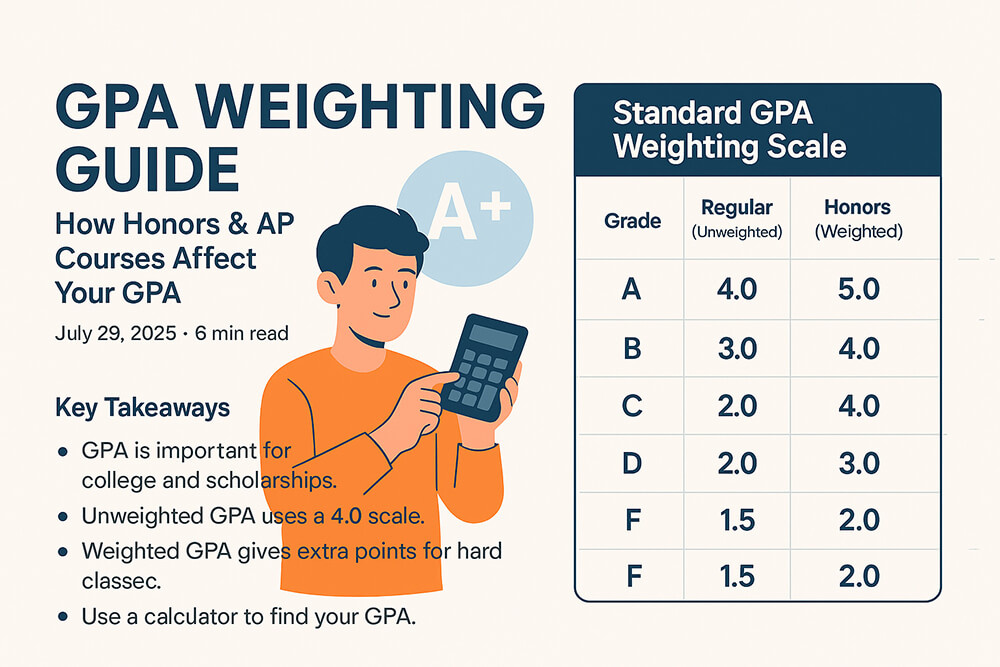
Many students could need fewer Post-Bacc GPA Boost Strategies if early scales were set up with care. The gpa-weighting guide for honors and AP, ib-to-gpa conversion guide, and how school districts calculate GPA page explain how points stack. The gpa-inflation vs deflation explainer, weighted GPA myths debunked guide, weighted vs unweighted GPA explainer, and weighted vs unweighted GPA calculator help families and schools plan fair scales.

For teens, simple planning now can cut repair later. The high-school GPA calculator, freshman-year GPA predictor, and trimester GPA calculator give early signals. Many districts also use 5.0 systems, which the 5-0 GPA scale guide covers. Thoughtful use of these tools makes it easier to walk straight into grad school later without heavy Post-Bacc GPA Boost Strategies.
Frequently Asked Questions About Post-Bacc GPA Boost Strategies

Can post-bacc classes change my old cumulative GPA?
Most schools keep your original undergrad GPA frozen. Post-bacc work sits on a separate line. Committees still read it closely. To see both views, use the college GPA calculator and cumulative GPA calculator. The gpa-formula guide and how to calculate GPA guide explain why the math stays this way.
How many credits do I need for a real GPA story change?
From the data, many students in the 2.9–3.2 range used 30–40 A-level credits. Students under 2.7 often needed 40–60 new credits plus a master’s. Use the last-60-credits GPA calculator, GPA trend graph generator, and multi-semester GPA bulk import tool to model how many strong terms you need.
Should I repeat old classes or just take new ones?
It depends on your school’s rules. The repeat course GPA recalculator and drop lowest grade analyzer show pure math. The grade replacement ROI calculator weighs time and cost. I often tell students to repeat key core or science classes and then add new, tougher work on top.
How do I plan my time during a heavy post-bacc?
Treat it like a focused job. Use the GPA goal-setting worksheet guide to pick term targets. Break them into weeks with the time management templates for GPA and raise my GPA action plan. The study-habit audit checklist and study-tips for better grades guide keep the daily steps small and clear.
I was on probation or suspended. Can post-bacc still help?
Yes, many people bounce back. Schools care about growth and honesty. Read the academic probation rules by state guide, a student’s guide to satisfactory academic progress, and reinstatement after academic suspension to see how status works. Then use Post-Bacc GPA Boost Strategies, the credit recovery course finder, and fresh A-level work to show a new pattern.
I studied outside the US. How should I plan Post-Bacc GPA Boost Strategies?
First, get a fair 4.0 estimate. Start at the international GPA converter guide. Then use tools such as the indian 10-point GPA to 4.0 converter, uk class system grades to 4.0 guide, ontario 12-point conversion guide, china 100-point conversion guide, and nigeria 5-point to US 4.0 converter. Once you have that number, Post-Bacc GPA Boost Strategies become much easier to plan against real cutoffs.