
Key Takeaways for PhD Admission GPA Cutoffs

| PhD GPA band | Short label | What it means for you |
|---|---|---|
| 3.8–4.0 | Elite | GPA will not limit any tier; research fit and letters lead. |
| 3.5–3.79 | Very strong | Competitive across most programs, strong base for T20 targets. |
| 3.2–3.49 | Mixed | Needs clear research, strong letters, and smart school list. |
| 3.0–3.19 | Hard | Field choice and research history matter more than the number. |
| Below 3.0 | Edge case | Bridge paths, master’s work, or long lab time become key. |

How PhD Admission GPA Cutoffs Compare Across Program Types

Average GPA across top 20 PhD programs sits near 3.73, higher than MBA program average GPAs and MS Engineering GPA ranges. That gap shows how closely PhD teams watch academic history. At elite T5–T10 programs, many admitted students live around 3.8, with ranges from about 3.7 to 4.0 and low admit rates.

You can place PhD Admission GPA Cutoffs inside larger college patterns with the GPA requirements for college admissions guide and the flagship university GPA requirements chart. The deans list thresholds chart and deans list eligibility checker show that many PhD-ready students also sit near honors lines at their home schools.
Check Your GPA Before You Judge PhD Admission GPA Cutoffs

Before you stress about PhD Admission GPA Cutoffs, you need a clean number. Start at The GPA Calculator home to see the toolkit. Use the college GPA calculator to load every course and credit. For a single term, the semester GPA calculator gives a tight snapshot, while the multi-semester GPA bulk import tool saves time when you track several years.
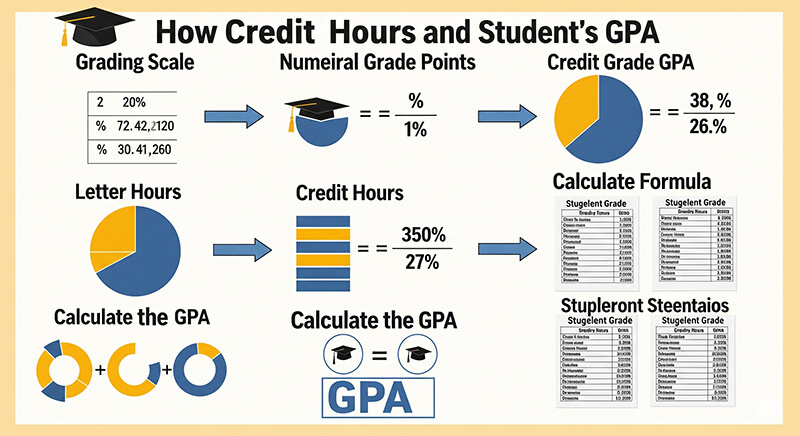
Make sure the math is right. The GPA formula guide, the how to calculate GPA walkthrough, quality points vs GPA explained, and the credit-hour weighting GPA guide show each step. If you convert local letters to numbers, the letter-to-point GPA conversion guide helps. Long-term tracking can use both the cumulative GPA calculator and the typo twin at /blog/cumulative-gpa-calculato. The mid-term grade projection slider shows where your term might land.
GPA Scales And Conversions For PhD Admission GPA Cutoffs
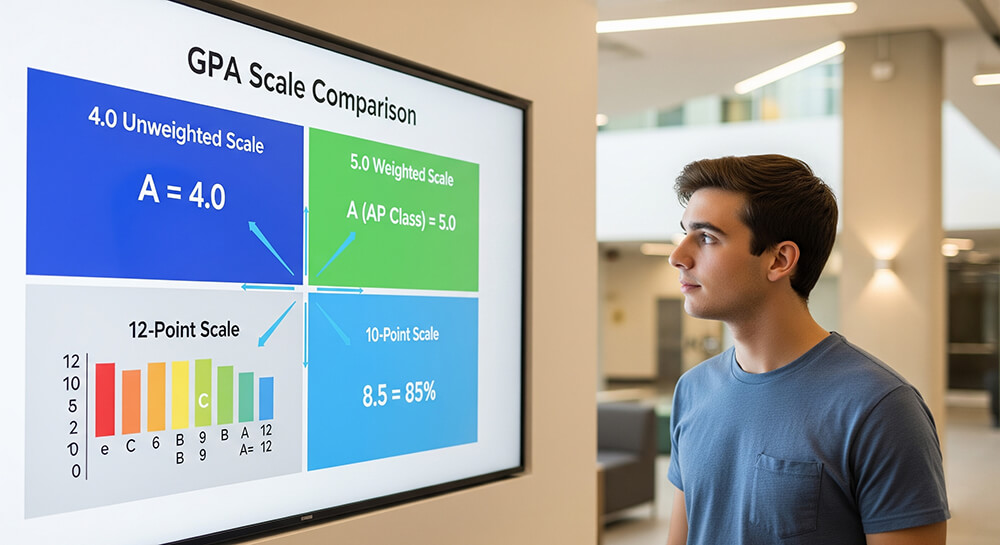
PhD Admission GPA Cutoffs live on the 4.0 scale, but your school might not. The GPA scale comparison guide, the types of GPA scales overview, and the pros and cons of GPA scales explain how each scale works. The history of GPA shows why 4.0 became the base for most PhD programs, while the 5.0 GPA scale guide explains high-weight systems.
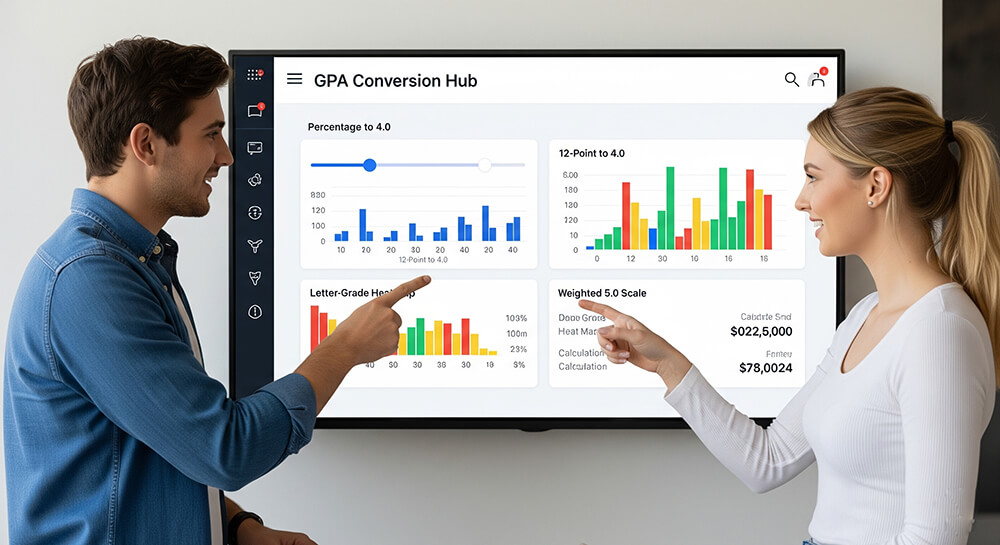
To map your record to PhD Admission GPA Cutoffs, use the percentage to 4.0 GPA conversion guide, the 12-point to 4-point scale chart, the letter grade heat map, and the GPA to percent reverse calculator. The 100-point to 5-point conversion guide, GPA conversion charts hub, 4.0 vs 5.0 GPA outcome simulator, and 12-point vs 10-point conversion cover many local systems.
GPA Trends, Last 60 Credits, And Core Courses For PhD

Faculty who read PhD files care about patterns. The GPA trend graph generator shows if you grew stronger over time. Many committees study the last 60 credits GPA calculator result, since it reflects advanced work and looks close to early graduate-level effort.

Subject mix matters. Use the prerequisite-only GPA calculator and the core vs elective GPA tool to isolate math, methods, and lab courses. If you changed majors, the major change GPA impact tool and the transcript GPA audit guide help explain your path. The study-abroad grades GPA integrator, the transfer credits GPA integrator, and the dual-degree GPA splitter keep complex records tidy.
Low GPA, Research Strength, And Real PhD Success Paths

Social media shows many stories of PhD students who began with low GPAs. Several people with 2.8–3.2 GPAs reached top programs by adding strong research and solid time in labs. The academic probation rules by state guide, a student’s guide to satisfactory academic progress, and reinstatement after academic suspension help you frame setbacks if you faced them.

Once you pass the minimum cutoff, research often matters more than tiny GPA shifts. Still, the deans list thresholds chart, deans list eligibility checker, and graduation honors GPA requirements guide show useful targets. Profiles at or above those levels often line up with safer PhD Admission GPA Cutoffs, while lower bands need extra strength in publications, talks, and letters.
Fix Past Grades While You Build A PhD-Ready Profile

Past grades do not freeze your path. The repeat course GPA recalculator shows how retaking a key class changes your average. Pair it with the drop lowest grade analyzer to test scenarios. The gpa-planning-for-incomplete-grades guide and the incomplete grades scenario planner help you see how “I” marks might end.

For new terms, the study tips for better grades guide, study habit audit checklist, time management templates for GPA, and raise my GPA action plan turn goals into weekly tasks. The GPA goal setting worksheet guide, grade replacement ROI calculator, and credit recovery course finder help you pick smart courses to retake. Track each term with the semester GPA calculator and the multi-semester GPA bulk import tool.
Clean up the math too. The common GPA calculation errors to avoid guide and the how pass/fail grades impact your GPA explainer show where small mistakes hide progress. I have seen students cross key PhD Admission GPA Cutoffs just by fixing wrong inputs and clarifying how pass/fail courses count.
Early Planning: High School And College Paths To PhD

Future PhD students often start shaping records long before senior year of college. The high school GPA calculator and freshman year GPA predictor help early planners see if they trend toward later PhD Admission GPA Cutoffs. The trimester GPA calculator supports three-term schools.
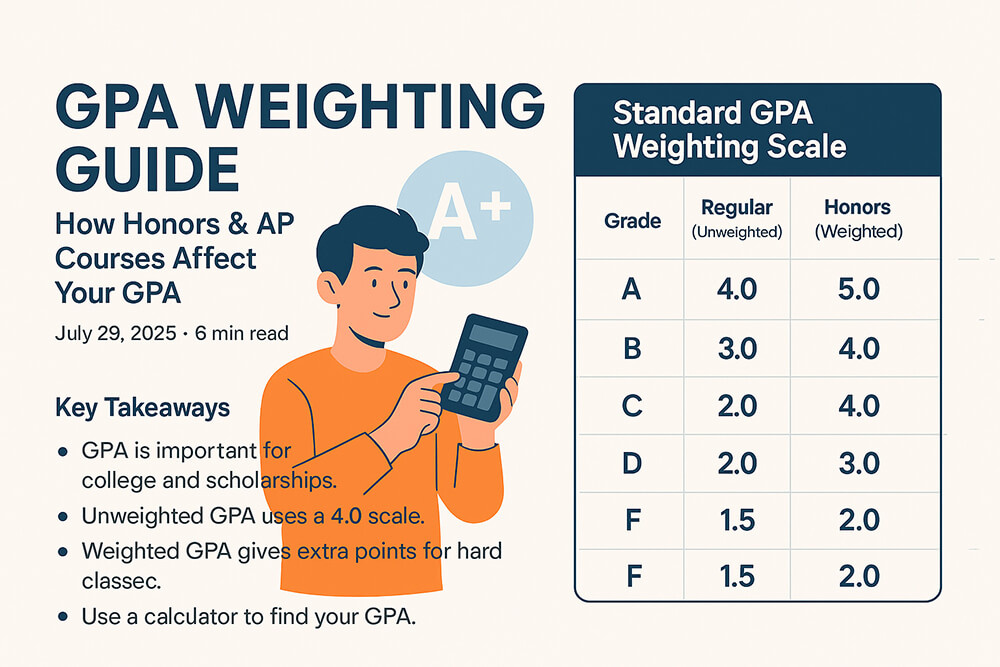
Scale rules matter. Use the GPA weighting guide for honors and AP, IB to GPA conversion guide, and how school districts calculate GPA to see how advanced work counts. The GPA inflation vs deflation explainer, weighted GPA myths debunked guide, weighted vs unweighted GPA explainer, and weighted vs unweighted GPA calculator keep things fair. Many PhD profiles include early community college transfer GPA planning as well.
International Students And PhD Admission GPA Cutoffs

International students often face the hardest time reading PhD Admission GPA Cutoffs. The international GPA converter guide gives a central path. Use the Indian 10-point GPA to 4.0 conversion, UK class system grades to 4.0 converter, and Ontario 12-point to 4.0 guide if you study in those systems.

Students from China can use the China 100-point GPA to 4.0 conversion guide. Students from Nigeria can use the Nigeria 5-point GPA to US 4.0 converter. These sit on top of the conversion stack built earlier with percentage to 4.0 conversion and GPA conversion charts and tools. Once you have a 4.0 value, you can read PhD Admission GPA Cutoffs with more certainty.
How PhD Admission GPA Cutoffs Compare With MBA And MS Goals
PhD Admission GPA Cutoffs are the strictest in this grad-school cluster. The MS Engineering GPA ranges guide reports an average near 3.61 across top programs. The MBA program average GPAs guide sits lower still, near 3.57. That means a GPA that feels weak for PhD might still fit MS or MBA routes.

You can plan across paths with tools like the test-optional vs GPA thresholds guide, the 5.0 GPA scale guide, and the 4.0 vs 5.0 GPA outcome simulator. For STEM-heavy PhD targets, keep your core-field record strong using the prerequisite-only GPA calculator and the core vs elective GPA tool. That way, even if the overall number sits near a cutoff, your subject profile still supports high research potential.
Frequently Asked Questions About PhD Admission GPA Cutoffs
What GPA do I need for a top PhD program?
Elite T5–T10 PhD programs often list averages around 3.8. That does not mean lower GPAs never gain entry, but it shows the common band. Use the college GPA calculator, last 60 credits GPA calculator, and GPA trend graph generator to see if your record sits near those PhD Admission GPA Cutoffs.
Can I get into a PhD program with a GPA below 3.0?
It is very hard, yet real stories show it can happen with long, strong research records. Many people with GPAs under 3.0 moved first into master’s work or lab jobs, then into PhD seats. Tools like the academic probation rules by state guide, a student’s guide to satisfactory academic progress, and reinstatement after academic suspension help you frame a comeback.
What matters more: GPA or research for PhD admission?
Once you meet a basic cutoff (often around 3.0–3.3), research usually matters more. Committees want proof you can run studies, think on your own, and work through setbacks. Keep raising grades with the repeat course GPA recalculator and credit recovery course finder, but also focus on lab time, posters, and papers.
How can I raise my GPA enough to cross a cutoff?
Start with a clear plan. Use the GPA goal setting worksheet guide, raise my GPA action plan, study tips for better grades, study habit audit checklist, and time management templates for GPA. Then test grade repair options with the grade replacement ROI calculator and repeat course GPA recalculator.
How do incomplete and pass/fail grades affect PhD Admission GPA Cutoffs?
These marks change both numbers and stories. Use the gpa-planning-for-incomplete-grades guide and incomplete grades scenario planner to model outcomes. The how pass/fail grades impact your GPA explainer and common GPA calculation errors to avoid guide help you keep math correct.
I studied outside the US. How can I read PhD Admission GPA Cutoffs?
First, convert fairly. Start with the international GPA converter guide, then use tools such as the Indian 10-point conversion, UK class system converter, Ontario 12-point to 4.0 guide, China 100-point conversion guide, and Nigeria 5-point to US 4.0 converter. Once you have a 4.0 number, you can place your profile against PhD Admission GPA Cutoffs with much more confidence.