
| What causes the mismatch? | Fast fix that usually works |
|---|---|
| Your school excludes some classes (PE, health, pass/fail, some electives) | Recalculate using core classes only with a core vs elective GPA rule |
| Your school uses a different grade-to-point table | Match your school’s letter-to-point conversion before you recalculate |
| Plus/minus points are different (A-, B+, A+ rules change) | Use your school’s exact A+/A/A- point values |
| Weighting is not what you assumed (Honors/AP/IB rules vary) | Apply the right Honors/AP/IB weight to the right classes |
| Credits, transfer classes, retakes, or rounding change totals | Check credit hours, transfer rules, repeat rules, and rounding |
Quick reality check: your GPA and transcript can both be “right”
A GPA mismatch feels like a mistake, but it is often a rule difference. Your school may use one GPA for class rank and another for college forms. An online calculator may use a default rule that does not match your district. Small gaps can also come from rounding.
Start by finding out what GPA your transcript shows. Many schools list weighted and unweighted numbers. Some schools list only one. A GPA like 3.68 vs 3.71 can be normal. A bigger gap like 3.8 vs 3.58 usually means the conversion table or credit rules are different.
If you want a clean baseline, use a tool that lets you pick course levels and credits. The high school GPA calculator gives you a structured way to enter classes and test outcomes. You can also compare weighted rules using a weighted vs unweighted GPA guide.

Core vs elective courses: the #1 reason grades don’t count the way you expect
Many schools calculate GPA using only “core academic” classes. Core classes often include English, math, science, social studies, and world language. Schools may exclude PE, health, pass/fail, and some electives from the GPA used for rank.
This creates a strange GPA feeling. You see a B in PE on your transcript and assume it lowers your GPA. Your school may ignore that grade for GPA. Or the opposite happens. You may include an easy A elective that boosts your GPA. Your school may ignore it, so the transcript GPA looks lower than your number.
A fast test is simple. Calculate GPA two ways: (1) all classes and (2) only core classes. If the core-only number matches your transcript better, you found the reason. The core vs elective GPA breakdown helps you spot what your school counts. A transcript GPA audit guide also helps you track what was included.

Your school may use a different grade-to-point conversion table
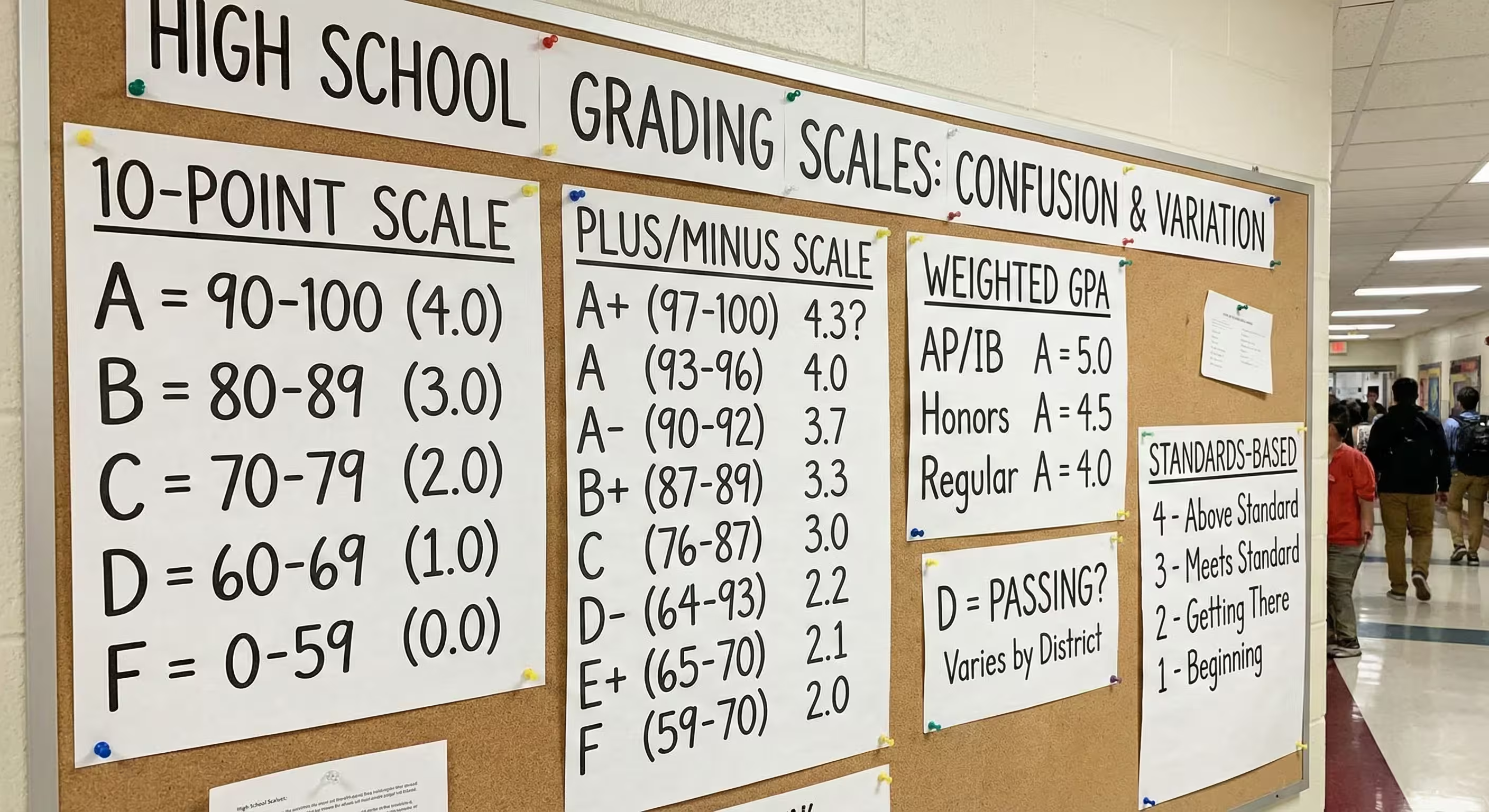
Many students assume this is universal: A=4.0, B=3.0, C=2.0. Some schools do that. Others do not.
Some schools use strict cutoffs like A=93–100 instead of A=90–100. Some schools use a plus/minus scale with A-=3.7 and B+=3.3. A few schools use a “point-per-percentage” method where 100% is 4.0 and every point below drops the GPA value. A student can have all A’s and still land below 4.0.
The easiest fix is to match the same table your school uses. Ask for the conversion chart, or look in your handbook. Then run your grades through a letter-to-point GPA conversion guide or a percentage-to-4.0 GPA conversion page. One small rule change can shift your GPA a lot.
Plus/minus grades: A+, A-, and B+ are not the same everywhere
Plus/minus values are a common surprise. One school gives A+ = 4.3. Another school gives A+ = 4.0 (same as A). Some schools do not use A+ at all. Even A- can vary. One school uses A- = 3.7. Another uses A- = 3.8.
These small point changes add up across many classes. If you have five A+ grades and your calculator gives 4.3, your “calculated GPA” may look higher than the transcript GPA. The transcript may treat those as plain A grades.
To fix this, copy your school’s exact plus/minus rule set. Then recalculate using the same mapping. The letter to point conversion guide helps you build the right values. If you want to see how point systems differ, the GPA conversion charts and tools page makes comparisons faster.

Weighted GPA bonuses change by school (Honors, AP, IB, and course type)
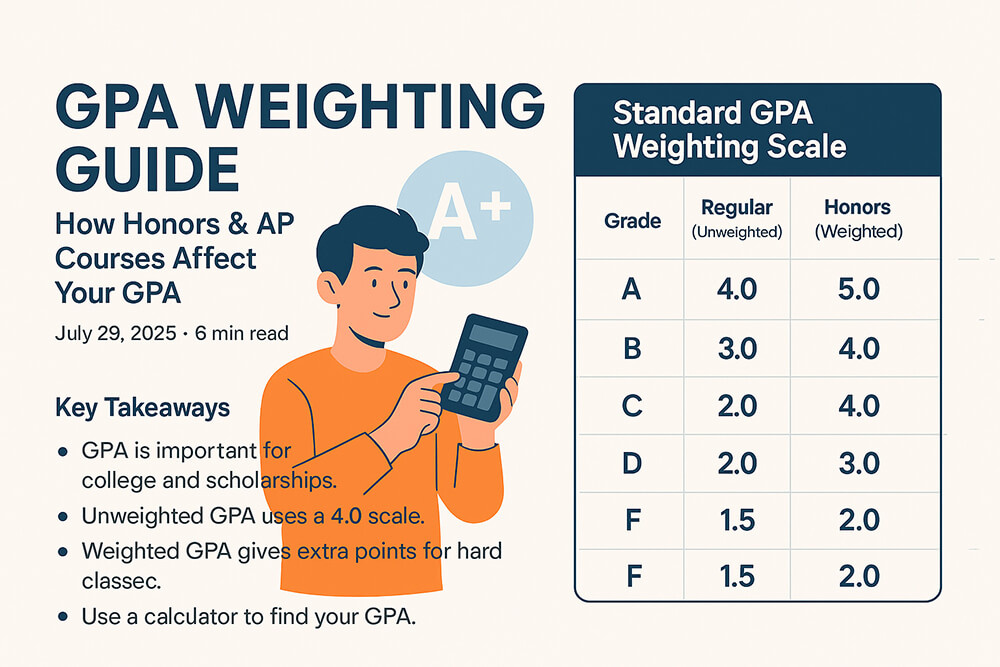
Weighted GPA rules are not universal. Many schools add +0.5 for Honors and +1.0 for AP/IB. Other schools add smaller bonuses, like +0.25 or +0.5 only. Some schools weight AP classes only. Some schools weight only core classes, even if an elective has an Honors label.
That is why a student might calculate 4.23 but the transcript shows 4.19. Both numbers can be correct under different weight rules. This also explains why two friends with the same letter grades can have different weighted GPAs.
To get a match, apply the school’s weighting policy to the correct course categories. The GPA weighting guide for Honors and AP helps you apply bonus points the way many districts do. If you want a quick side-by-side check, the weighted vs unweighted GPA calculator is useful for testing.
Credit hours and “local credits” can make your math look wrong
GPA is not always a simple average. Many schools weight by credits. A year-long class can count more than a semester class. Lab sciences can carry different credit values. If you treat every class as equal, your GPA can drift away from the transcript number.
Some states and districts also use “local credits” or unusual units. California schools sometimes show credit values that do not match the standard unit most people expect. If you do not convert units correctly, your quality point totals will be off.
If your transcript lists credits next to each class, use them. Multiply grade points by credits for each class, then divide by total credits. The credit hour weighting GPA guide explains this clearly. The quality points vs GPA explained page also helps you see why “points ÷ credits” is the real formula.

Transfer and dual enrollment grades may not count in your school GPA
Dual enrollment and transfer classes can cause big confusion. Your transcript may show the course and the grade. Your school may still exclude that grade from GPA. The class can count for graduation credit, but not for GPA rank.
This often happens with community college courses taken during high school. Students include that A in their GPA math, then the transcript GPA looks lower. Or the school marks it with “T” or a transfer code and keeps it out of the GPA totals.
To test this, recalculate without any transfer or outside-school courses. If the new number matches your transcript GPA, you found the reason. The transfer credits GPA integrator can help you separate what counts for school GPA vs what counts for your overall academic record. If you run two programs at once, the dual degree GPA splitter can also keep totals clean.

Retakes and grade replacement rules change the “real” GPA
Retake rules can hide or keep old grades, depending on the school. One school replaces the old grade and counts only the new attempt. Another school keeps both attempts and averages them. Another school counts both as separate lines forever.
This is why a student might remember a failed class but still see a higher GPA than expected. The school may “replace” the grade for GPA. Or the opposite happens. A student expects the old grade to vanish, but the transcript GPA still includes it.
Also note that outside systems can compute GPA differently. Some college application services and professional programs count both attempts, even if your school replaces the grade. If you want to see how retakes change totals, use the repeat course GPA recalculator and compare with your transcript rules. A grade replacement ROI calculator can also help you see if a retake is worth it.

Rounding rules can create small gaps that feel “too specific”
Rounding is a quiet GPA rule that can change a few hundredths. One school rounds to two decimals (3.67). Another keeps three decimals (3.675). Another truncates (drops digits) instead of rounding.
Across many classes, tiny differences can stack up. That is why you might get 3.68 while the transcript shows 3.67, even when every course rule matches. This does not mean anyone made a mistake. It means the last step of the math is different.
A good sign is the size of the gap. If the difference is under 0.05, rounding is a likely cause. If the gap is over 0.10, it is usually course inclusion, conversion tables, credit hours, or weighting.
If you want to reduce rounding surprises, calculate using full decimals until the end. Then round once. The GPA formula guide and common GPA calculation errors to avoid pages explain where rounding mistakes sneak in.

Cumulative GPA mistakes: averaging term GPAs is the biggest trap
A common mistake is averaging semester GPAs instead of recalculating quality points. This seems logical, but it is wrong when credits differ. A 3-credit class and a 1-credit class should not affect the GPA the same way. Your school uses total quality points divided by total credits.
For example, two semesters can have different credit totals. If you average the two semester GPAs, you can get a number that looks close but still does not match the transcript. Another mistake is leaving out an old term, a summer term, or a partial term.
The fix is simple. Add every class together at once. Multiply grade points by credits for each course. Add those quality points. Divide by the total credits. If you want a guided way to do this, the cumulative GPA calculator and multi-semester GPA bulk import tool make it faster. The quality points vs GPA explained guide also shows the correct math in plain terms.

Colleges often recalculate GPA, so the transcript number is not the final word
College admissions teams see many GPA systems. Schools use different scales, weighting rules, and course lists. To compare students fairly, many colleges recalculate GPA using their own rules. They may focus on core classes, remove weighting, or apply a standard 4.0 method.
That is why a small mismatch usually does not hurt you. The transcript shows the full story: course names, levels, grades, and trends. A student with strong grades in hard classes can look great even if the exact GPA decimals vary.
This matters even more for professional tracks. Nursing, engineering, grad school, and medical programs can have their own GPA standards. If you want to plan for those targets, check GPA benchmarks for professional programs and the medical school GPA averages (AMCAS 2024–2025) guide. For grad paths, the grad school GPA requirements guide can help you set realistic goals.

A fast GPA audit you can do today (without guessing)
A good GPA audit feels boring, and that is the goal. You want clean inputs and clear rules.
Start by listing every class on your transcript with its credit value and final grade. Next, mark each class as core, elective, pass/fail, transfer, Honors, AP, or IB. Then apply your school’s grade conversion table and weighting policy. Multiply grade points by credits for each course. Add quality points. Divide by total credits. Round only at the end.
If your number still does not match, focus on the few classes that create the largest difference. Look for transfer labels, repeats, pass/fail marks, or odd credit units. The transcript GPA audit guide helps you spot those fast. If you need a reliable calculator for clean entry, the college GPA calculator and the main GPA Calculator tools are a good starting place.

Frequently Asked Questions
Why is my GPA lower on my transcript than what I calculated?
Your school may exclude some classes, use stricter cutoffs, or use different plus/minus values. Start with core vs elective GPA rules and the letter-to-point conversion guide, then recalculate using credits.

Can I have all A’s and still not have a 4.0 GPA?
Yes. Some schools use strict rules like A=93–100 only. Some use point-per-percentage scoring. A 93% and a 99% can both be “A” but give different GPA points. Use a percentage to 4.0 GPA conversion tool to see how your school might score it.
Do colleges care if my GPA is 3.71 but my calculator says 3.76?
Small gaps rarely matter. Colleges read the transcript and often recalculate GPA anyway. What matters most is your grades in core courses, course level, and trend. If you want target ranges, check GPA requirements for college admissions.

Do dual enrollment classes count in my high school GPA?
Often no. Many schools list dual enrollment for credit but exclude it from the school GPA. Test your numbers with and without those classes. The transfer credits GPA integrator helps split them cleanly.
How do I calculate GPA the same way my school does?
Use the school’s exact grade conversion table, class inclusion list, weighting rules, credit values, and rounding style. The how school districts calculate GPA guide helps you match the right rule set.
What is the most common GPA calculation mistake students make?
Averaging semester GPAs instead of recalculating quality points. Always compute total quality points ÷ total credits. The GPA formula guide explains the correct method in simple terms.