
- A 4.0 GPA means your school uses unweighted grading (an A is always 4.0), no matter the class difficulty.
- A 5.0 GPA usually means your school uses standard weighted GPA, where Honors/AP/IB can boost points.
- A 6.0 GPA often means a multi-tier weighted system that rewards AP, IB, and dual credit even more.
- The same grades can look totally different on different scales, so the number alone is not the full story.
- Colleges read your transcript, course level, and school profile, not just the “big GPA number.”
What “weighted GPA scales” really mean (and why the number changes)
A weighted GPA scale is a school rule, not a “smartness score.” Two students can earn the same grades in the same level of classes, but their GPAs can look different because their schools use different math.
Some schools stay strict with a 4.0 unweighted GPA. Other schools add points for harder classes and use a 5.0 weighted GPA or even a 6.0 weighted GPA system. A few schools cap the GPA so it cannot rise too high, even with many AP classes.
If you want the cleanest way to compare your results, calculate both your weighted and unweighted numbers using a high school GPA calculator that lets you set the exact scale your school uses.

4.0 scale (unweighted): the simplest GPA system
The 4.0 scale is the classic unweighted system. It treats every class the same. That means an A in AP Calculus and an A in regular Algebra both count as 4.0.
Common point values look like this:
- A = 4.0
- B = 3.0
- C = 2.0
- D = 1.0
- F = 0.0
This scale is easy to understand, and it helps schools compare students in a simple way. The downside is also simple: it does not show course difficulty. A student can avoid hard classes and still look “perfect” on paper.
If you want to see how weighted and unweighted results differ, check the weighted vs unweighted GPA guide for a clear breakdown.

5.0 scale: the most common weighted GPA system
The 5.0 weighted GPA scale is the most common in many U.S. high schools. It keeps regular classes on a 4.0 base, then adds bonus points for advanced courses.
A typical system looks like this:
- Regular class A = 4.0
- Honors class A = 4.5
- AP/IB class A = 5.0
This scale pushes students to try harder classes without making GPAs look “wild.” It also helps schools rank students when many people earn high grades.
Still, not every 5.0 system is the same. One school might give Honors a +0.5 boost, while another gives +0.3. That is why a 4.8 at one school can mean the same thing as a 4.6 at another.
To learn the exact rules and examples, use the 5.0 GPA scale guide.

6.0 scale: multi-tier weighting that rewards more pathways
A 6.0 weighted GPA scale is usually a multi-tier system. It separates classes into levels so schools can reward more than just “regular vs AP.”
One common setup looks like this:
- Tier 1 (up to 5.0): on-level classes
- Tier 2 (up to 5.5): advanced or special programs
- Tier 3 (up to 6.0): AP, IB, and dual credit
This system became popular because many schools see dual credit as real college-level work. Families also like it because dual credit can save money.
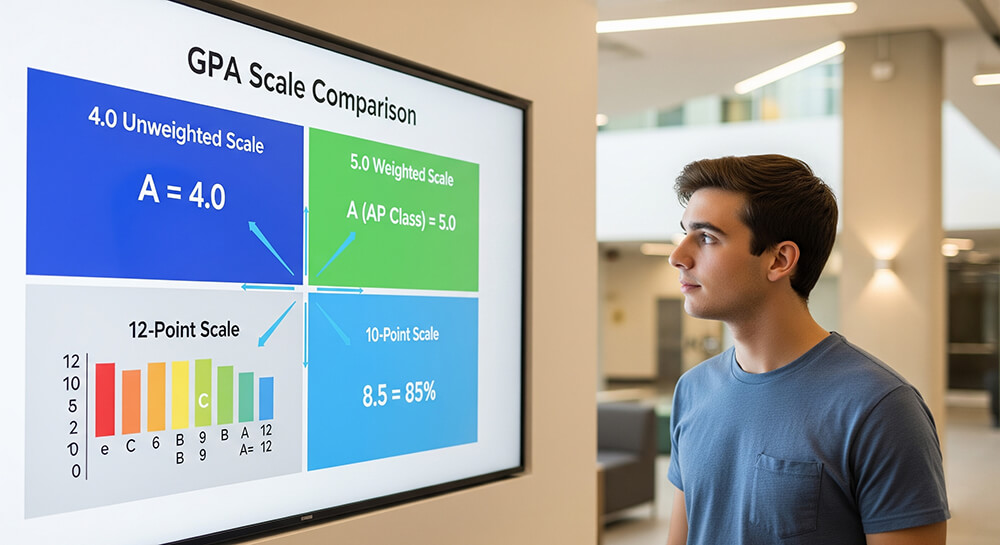
The big problem is the “optics.” A 5.6 GPA sounds unreal to students from a 5.0 school. The truth is simple: it is just a different scale. If you want a clear way to compare systems, try a GPA scale comparison view so the numbers make sense.
Capped weighted scales (like 4.5): why some schools limit GPAs
Some schools use weighted GPA but set a hard ceiling, like 4.5 (or a similar cap). This means a student can take hard classes, but the GPA cannot rise forever.
A capped model may look like this:
- Regular classes cap at 4.0
- Honors max might be 4.25
- AP/IB max might be 4.5
Schools do this to reduce GPA inflation and stop “easy bonus hunting.” It can also prevent a huge pile-up of students at the very top.
The downside is real: if the cap is strict, it can feel like the hardest-working students do not get extra credit for taking more advanced classes. If your GPA feels lower than expected, check the GPA inflation vs deflation explanation so you know what your school’s rules are doing.

100-point GPA systems: why “111 GPA” is not crazy
Some schools use a 100-point scale, where grades start as percentages and weighting adds bonus points.
A common pattern looks like:
- Regular max: 100
- Honors max: 110
- AP max: 120
This system feels “more exact” because it can show tiny differences like 102.3 vs 102.1. But it also creates confusion because the numbers look huge and do not match the 4.0 world.
If you ever need to convert a percentage-style GPA, use a tool built for it, like a percentage to 4.0 GPA conversion chart. It helps you speak the same “GPA language” as other schools.

Same student, different GPA: how one report card can look “better” or “worse”
Here is the key idea: your GPA can change even when your grades do not.
Imagine the same student earns:
- 5 AP A’s
- 2 Honors B’s
- 3 Regular A’s
Depending on the school scale, that student could end up with a GPA that looks “small” or “huge.” A capped system might show a lower max, while a 6.0 system might show a much higher number for the same work.
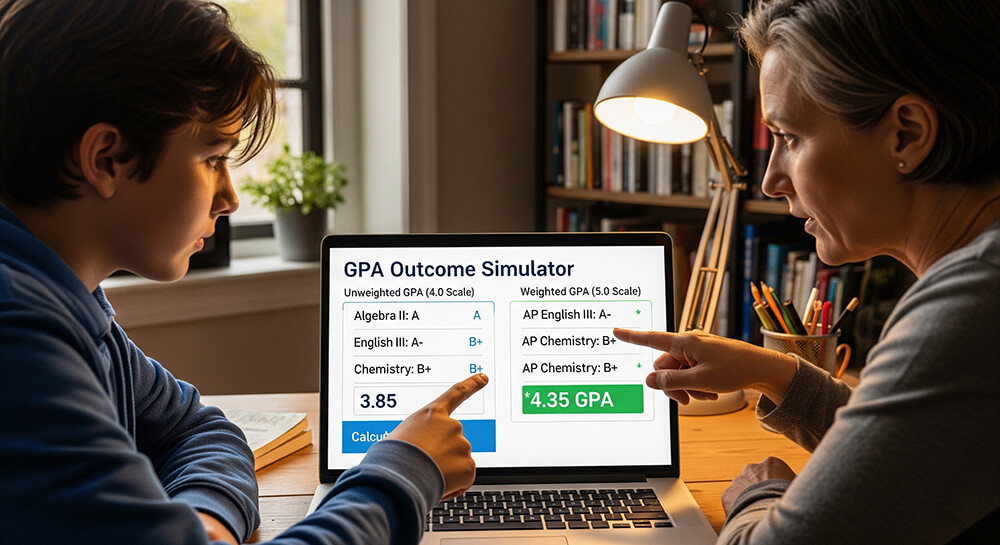
This is why comparing students across schools by weighted GPA alone can be unfair. The best quick check is to run your grades through a tool that lets you test different systems.
If you want to see the difference clearly, use the 4.0 vs 5.0 GPA outcome simulator to view how scale choices change the final number.
What colleges actually do with 4.0 vs 5.0 vs 6.0 GPAs
Most colleges do not compare weighted GPAs across schools like a scoreboard. They know a 5.5 from one school may equal a 4.5 from another.
Colleges usually focus on:
- Your grades in core classes
- Your course rigor (AP, IB, Honors, dual credit)
- Your school profile (how your school calculates GPA)
- Your class rank (if your school reports it)
Some colleges recalculate GPA using their own rules. Others treat weighted and unweighted GPA as helpful context, then read the transcript for the real story.
If you want a clean understanding of how the math works, read the GPA formula guide and the quality points vs GPA explained page.

How to find your school’s exact GPA scale in 5 minutes
You do not need to guess your scale. You can find it fast if you know where to look.
Try these simple checks:
- Open your student portal and look for “GPA calculation”
- Ask your counselor which weighting rules your school uses
- Look at a transcript and find the GPA scale note
- Read the student handbook section on grading rules
You should also check whether your school weights:
- Honors only
- AP/IB only
- Dual credit (and at what tier)
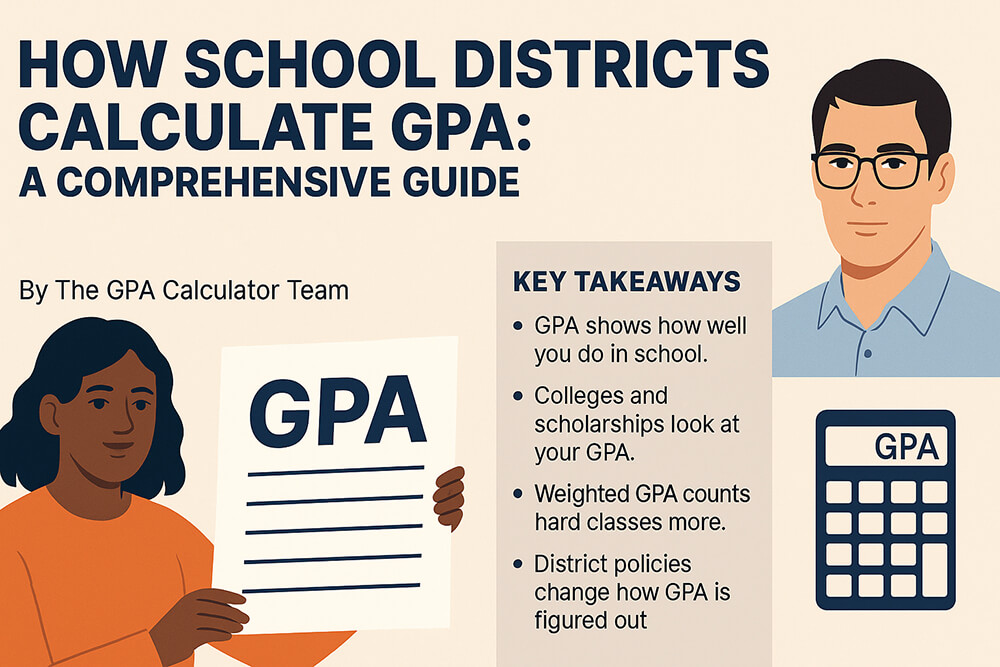
If your GPA number feels “off,” it may be because your school counts credits, course levels, or categories in a special way. The how school districts calculate GPA guide can help you spot the rule that changes your result.
Calculate your weighted GPA the right way (and avoid common mistakes)
Weighted GPA errors happen all the time. Most mistakes are not “math mistakes.” They are rule mistakes.
The most common problems:
- Using the wrong scale max (4.0 vs 5.0 vs 6.0)
- Weighting a class that should be unweighted
- Mixing semester and trimester classes the wrong way
- Forgetting credit hours or course level differences
A good fix is to calculate your GPA in two ways:
- Run a high school weighted GPA using your school’s rules
- Run an unweighted GPA to get a clean baseline
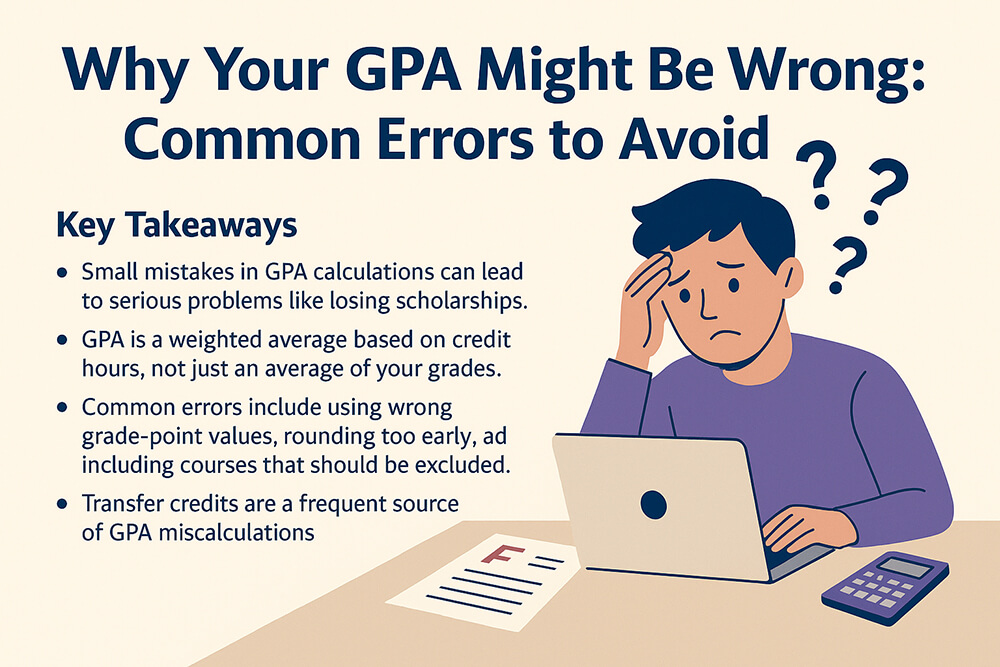
For clean numbers across terms, use the cumulative GPA calculator and double-check with the common GPA calculation errors to avoid guide.
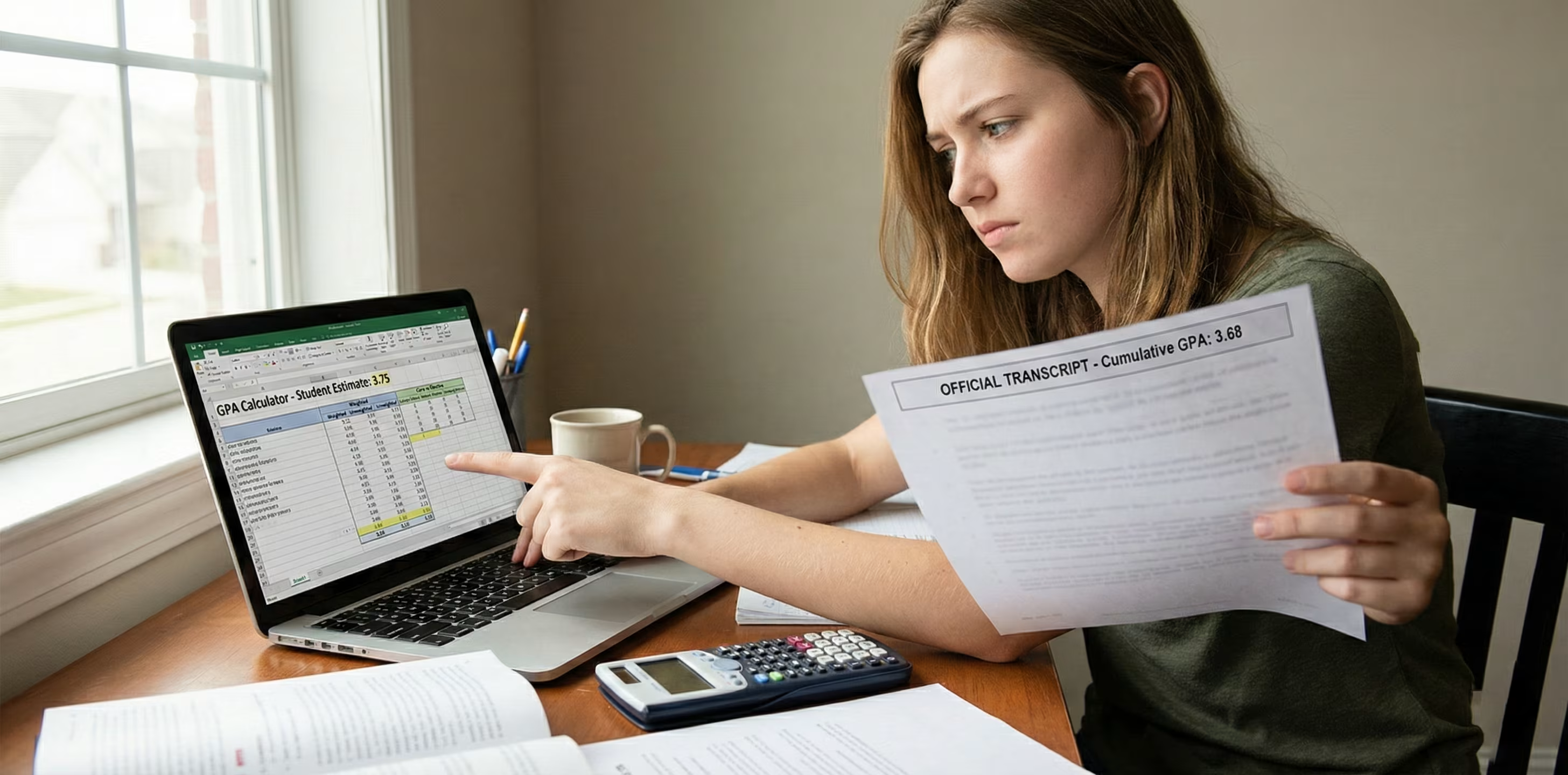
Why your GPA does not match your transcript (and what to do)
Sometimes students do everything right and the GPA still looks wrong. This happens because many transcripts hide extra rules.
Common reasons include:
- Your school uses quality points behind the scenes
- Certain classes are excluded (like PE or pass/fail credits)
- Your school changes weighting by grade level (9th vs 10th–12th)
- Your district caps AP points or limits how many weighted classes count
The best move is to run a transcript check using a step-by-step guide. Then compare what you calculated to what the school reports.
If you want a clear checklist, use the why GPA does not match transcript guide. It helps you find the exact line where your numbers split.
Smart course choices: how to show rigor without “GPA gaming”
Students often feel pressure to chase the biggest number. That can backfire. Colleges care about strong grades in hard classes, not a “cute” GPA trick.
Good course planning looks like this:
- Take advanced classes in subjects you can handle well
- Keep your schedule balanced across math, science, English, and history
- Avoid adding random weighted classes only for points
- Choose depth over chaos (hard classes you can actually do well in)
If you want your GPA to rise, focus on habits, not loopholes. Small daily moves beat last-minute panic every time.
For help on raising grades in a real way, use study tips for better grades and the raise my GPA action plan guide.

Parents and students: what matters more than the “big GPA number”
A 6.0 GPA can look impressive. A 4.0 can look “small.” The truth is that colleges know the scale game already.
Focus on what stays meaningful across schools:
- Your unweighted GPA trend
- The level of courses you take each year
- Your grades in core subjects
- Your consistency (no big drops without a reason)
If your student is aiming at selective programs later, GPA expectations can vary a lot by path. It helps to check real benchmarks early so goals feel clear and fair.
You can explore examples using the GPA requirements for college admissions guide and the medical school GPA averages resource to see how competitive GPAs usually look.

Frequently Asked Questions (FAQ)
Is a 6.0 GPA “better” than a 4.0 GPA?
Not always. A 6.0 GPA usually comes from a school that uses a 6.0 weighted scale. A 4.0 GPA often comes from a 4.0 unweighted scale. Colleges compare students by looking at grades, course level, and your school profile. The number alone is not enough. If you want to compare systems, use the GPA scale comparison guide.
What is the most common weighted GPA scale in U.S. high schools?
The 5.0 weighted GPA scale is very common. Many schools keep regular classes on 4.0 and boost Honors and AP/IB classes. Rules still differ by district, so two “5.0 schools” may not weight the same way. The 5.0 GPA scale guide shows real examples.
Do colleges recalculate weighted GPA?
Many colleges do. Some recalculate GPA using only core classes, and many apply their own weighting rules. That is why a “high” weighted GPA from one school may not stay high after recalculation. If you want to understand the math behind it, read quality points vs GPA explained.
How do I calculate my weighted GPA if my school uses a special scale?
Use a calculator that lets you set your exact course levels and weighting rules. Start with the high school GPA calculator, then compare your results with your transcript numbers to confirm accuracy.
Why does my GPA not match what I calculated?
Most mismatches happen because of hidden school rules, like capped weighting, excluded classes, or special credit handling. Use the why GPA does not match transcript guide to find the exact reason fast.
Should I focus more on weighted GPA or unweighted GPA?
Use both, but trust unweighted more for cross-school comparison. Unweighted GPA is easier to compare, and weighted GPA helps show course rigor at your school. If you want a clear explanation with examples, read the weighted vs unweighted GPA guide.