
-
Key Takeaways
- Unweighted GPA uses a simple 0.0–4.0 scale and treats every class the same.
- Weighted GPA adds extra points for Honors, AP, or IB, so it can go above 4.0.
- Many colleges recalculate GPA to compare students fairly across different schools.
- A high unweighted GPA shows strong, steady grades in every class.
- A high weighted GPA shows course rigor, even if the unweighted number is a bit lower.
- Always check your school’s rules, because weighting systems vary by district.
Weighted GPA versus unweighted: what the numbers really say

Weighted GPA versus unweighted is mostly about one question: Does course difficulty change the number? An unweighted GPA answers with “no.” It uses a 4.0 scale and gives the same value for an A in every class. A weighted GPA answers with “yes.” It adds points for tougher classes like Honors, AP, or IB, so the final number can rise above 4.0.
These two numbers can tell different stories for the same student. A student with a slightly lower unweighted GPA may still look strong if the transcript shows hard classes and solid grades. For a clear side-by-side view, see the weighted vs. unweighted GPA guide, and compare results with a weighted vs unweighted GPA calculator.
How unweighted GPA is calculated on the 4.0 scale
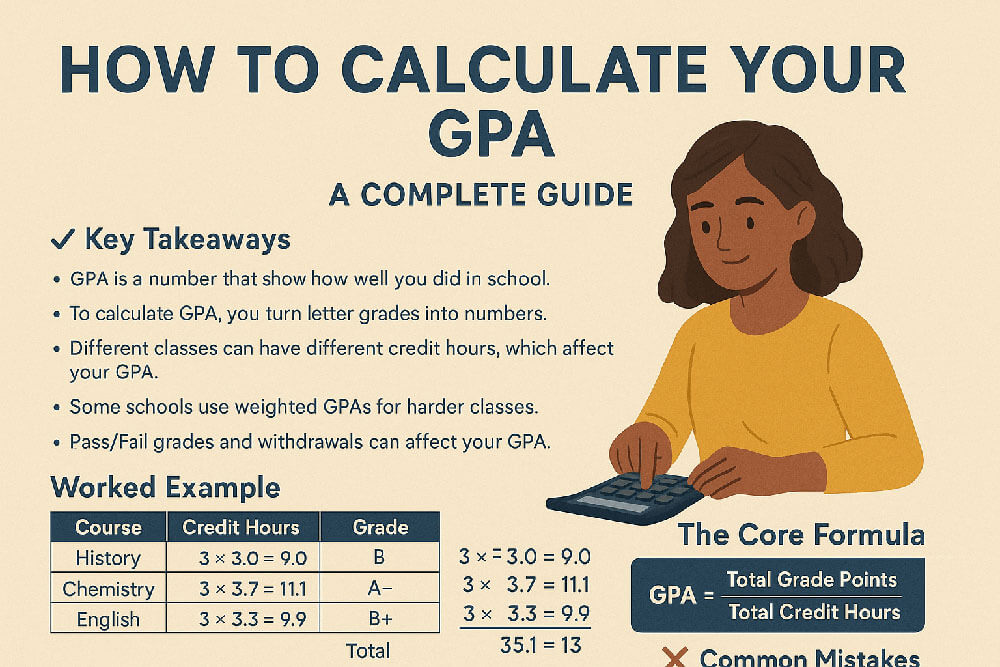
Unweighted GPA turns letter grades into points, then averages them. Most schools use a 4.0 scale: A = 4.0, B = 3.0, C = 2.0, D = 1.0, F = 0.0 (some schools also use plus/minus values). The key rule stays the same: course level does not change the points.
Example: five classes with grades A, A, B, A, B. Convert to points: 4.0 + 4.0 + 3.0 + 4.0 + 3.0 = 18.0. Divide by 5 classes: 18.0 / 5 = 3.6 unweighted.
This number works well for quick comparisons because it stays on a standard scale. For the exact math and common variations, use the walkthrough at how to calculate GPA and the deeper formula breakdown at GPA formula guide.
How weighted GPA adds points for Honors, AP, and IB
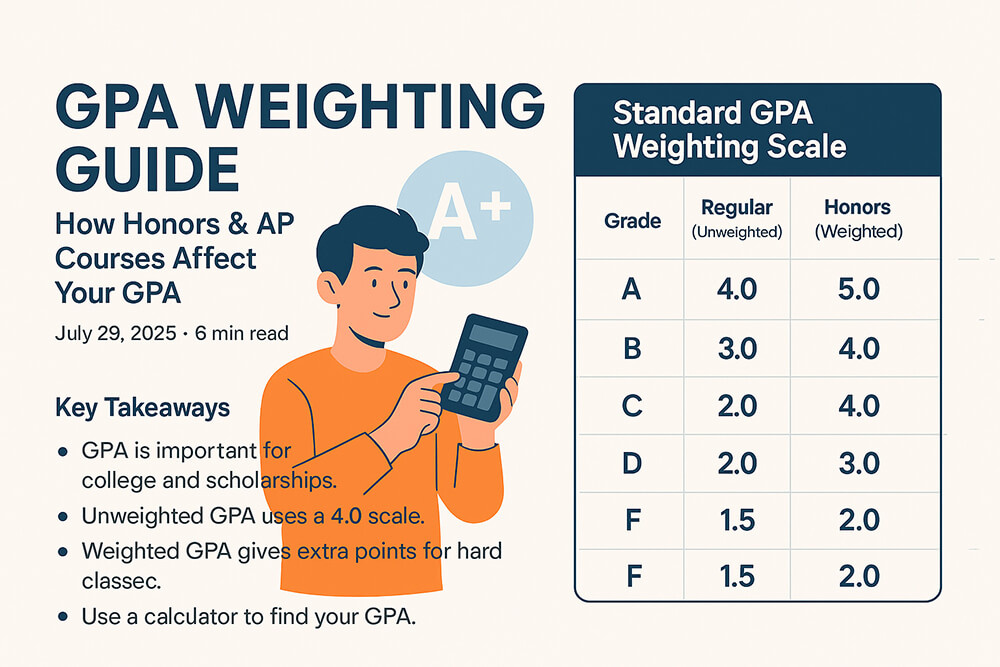
Weighted GPA starts with the same grade-to-point idea, then adds bonus points for harder classes. A common setup is +0.5 for Honors and +1.0 for AP/IB. That means an A in AP may count as 5.0 instead of 4.0, while an A in Honors may count as 4.5.
This system pushes students to take challenging classes, and it helps schools show course rigor in a single number. The tradeoff is consistency: one district may cap at 5.0, while another may allow 6.0 or use a different bonus.
To see typical point adds and school differences, check the GPA weighting guide for Honors and AP and the overview of a 5.0 GPA scale.
A side-by-side example using the same grades

A clean way to understand weighted vs. unweighted is to keep grades the same and change only the course levels.
Same grades: A, A, B, A, B Course levels: 2 AP classes, 1 Honors class, 2 standard classes
| Class type | Grade | Unweighted points | Weighted points (example) |
|---|---|---|---|
| AP | A | 4.0 | 5.0 |
| AP | A | 4.0 | 5.0 |
| Honors | B | 3.0 | 3.5 |
| Standard | A | 4.0 | 4.0 |
| Standard | B | 3.0 | 3.0 |
Unweighted total = 18.0 → 3.6 GPA Weighted total = 20.5 → 4.1 GPA
The grades did not change. The course rigor changed the weighted number. For help tracking “quality points” and avoiding mix-ups, use quality points vs. GPA explained and the credit hour weighting guide.
Why schools use weighted GPA for rank and awards
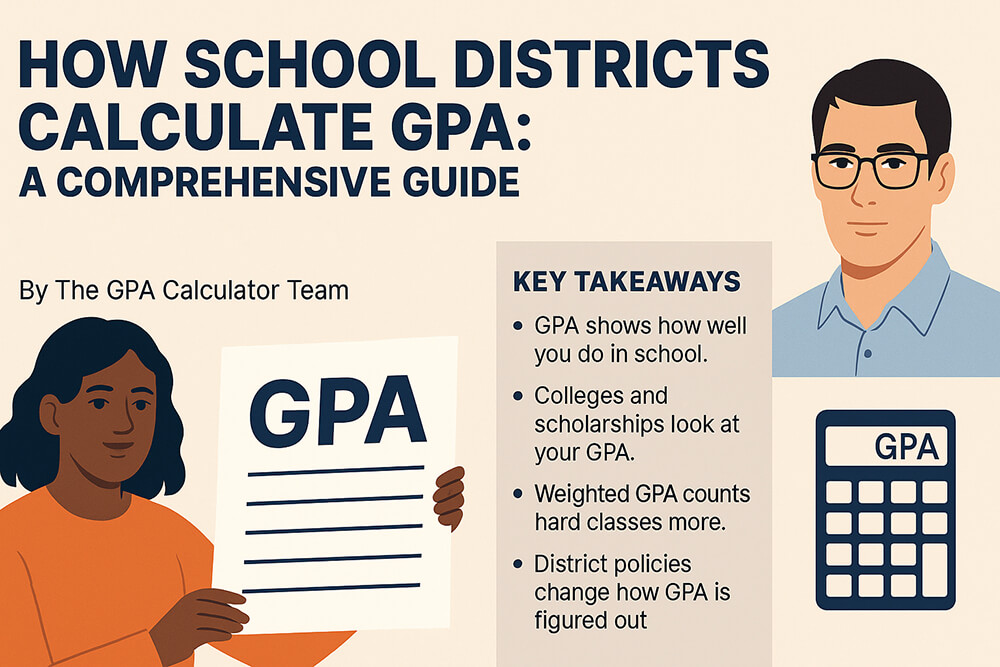
Many high schools use weighted GPA for class rank because it rewards students who take harder classes. It can separate two students who both earn mostly A’s, even if one student took more AP or IB courses. This is also why weighted GPA often shows up in decisions tied to rank-based awards.
The problem is fairness across schools. Two students can both report “4.5 weighted,” but the numbers may come from different rules. One school may give a full +1.0 bonus for every AP class. Another may cap how many bonus classes count.
If the weighting rules feel confusing, it helps to read how school districts calculate GPA and compare what grade inflation can do to averages at GPA inflation vs deflation.
How colleges compare students from different high schools

Colleges often look at both numbers, but many also run their own GPA math to compare students fairly. That is because weighting systems vary. A college may recalculate using a standard set of classes (often core academics) and may limit how many weighted courses count.
Course rigor still matters a lot. A slightly lower unweighted GPA with strong AP/IB classes can look better than a higher unweighted GPA built from easier courses. Admissions teams also read the transcript for patterns: steady grades, trend over time, and what level of classes a student chose when options existed.
For a practical view of what schools expect, see GPA requirements for college admissions and the broader benchmarks list at flagship university GPA requirements.
When unweighted GPA helps you the most

Unweighted GPA helps most when a clear, standard number matters. Many counselors, scholarship screeners, and programs still use a quick unweighted check because it sits on a 4.0 scale and stays easy to compare.
Unweighted also tells a simple story: How strong were the grades, no matter the class type? A high unweighted GPA shows steady effort in every subject. It can also matter for students who had limited access to AP or IB courses, because it avoids the “bonus points” issue.
If your transcript has different grading rules across years, or if your school changed policies, a transcript review can prevent surprises. Use the transcript GPA audit guide and the common GPA calculation errors list.
When weighted GPA helps you the most

Weighted GPA helps most when you want the number to reflect academic challenge. If you take Honors, AP, or IB classes, weighting can show that effort in a way unweighted GPA cannot. This is why many students have results like 4.0 unweighted and 4.6 weighted when they load up on advanced classes and keep strong grades.
Weighted GPA can also help explain a transcript that includes a few tougher classes with slightly lower grades. A B in a hard class can still show strong readiness, especially if the transcript overall stays solid.
Still, weighted GPA can be misunderstood. Some students assume a “high weighted” guarantees admissions success, but colleges still read the full transcript. To avoid bad assumptions, check weighted GPA myths debunked and compare outcomes on different scales at 4.0 vs 5.0 GPA outcome simulator.
Quick checks that prevent GPA confusion
Most GPA stress comes from simple mix-ups. These checks fix a lot of problems fast:
- Confirm the scale. A 4.2 means nothing unless it is clear that it is weighted.
- Separate course types. Mark Honors, AP, IB, and standard courses before calculating.
- Match your school’s rules. Some schools weight only certain subjects, or cap bonus points.
- Use the right grade conversion. A “90” does not map the same way in every district.
- Check rounding. Small rounding rules can change rank outcomes.
If a transcript uses letters, use a clear conversion chart. If it uses percent grades, use a percent-to-4.0 tool first. Helpful references include common GPA calculation errors to avoid and the letter grade conversion guide.
Tools that make weighted vs. unweighted simple

The cleanest way to compare is to calculate both numbers using the same class list. Start with a high school calculator, then run a weighted version using your school’s add-on points.
Useful tools and planners include:
- High school GPA calculator for fast totals
- Weighted vs unweighted GPA calculator for side-by-side results
- GPA trend graph generator to spot an upward trend
If the goal is college planning, it can also help to track semester totals and long-term averages. For that, use semester GPA calculator and cumulative GPA calculator. For a full hub of tools, visit https://www.thegpacalculator.com.
What to do if your GPA feels “too low”

A GPA can improve with small, steady moves. The best move depends on the problem.
If grades slip because of weak habits, fix the daily basics first: study time, sleep, and planning. Use the practical list at study tips for better grades. If one or two classes drag down the average, run a “what-if” plan for the next term and set a target GPA. A simple way is to calculate your needed semester GPA and then pick the hardest classes you can handle well.
If a school offers grade replacement or repeats, check how that changes the math. For students who need a second chance path, conditional or post-bacc options exist in some settings. Helpful reads include conditional admission GPA guide and post-bacc GPA boost strategies.
Frequently Asked Questions

Is weighted GPA versus unweighted more important for college admissions? Colleges often use both, then focus on transcript rigor. Many recalculate GPA using their own rules.
Can a weighted GPA hurt you? It can confuse comparisons if the school uses unusual weighting. Keep the unweighted number ready too.
Do AP and IB always add the same points? No. Rules change by school. See typical systems at how school districts calculate GPA.
Does weighted vs. unweighted matter after high school? College and grad programs focus on college GPA. Start with grad school GPA requirements guide or medical school GPA averages AMCAS 2024-2025.