
| Key takeaway | What it means for your GPA |
|---|---|
| Plus/minus is a redistribution, not a universal penalty | Many students’ GPAs stay close to the same, but some go up and some go down based on their grade mix. |
| The “0.3 up / 0.3 down” rule is common | B+ and C+ can lift you, while A− and B− can pull you down. |
| The A+ rule is the biggest fairness fight | Many schools count A+ = 4.0, so you get no bonus for perfect work but still lose points for an A−. |
| Your school’s percent ranges may differ | A at one school might start at 93%, while another uses 95%. Always match your transcript rules. |
| Colleges and programs may recalculate GPA | Your “official” GPA is real, but admissions teams often compute their own version from your transcript. |
| A good calculator should show both versions | Comparing plus/minus vs whole-letter can reduce stress and help you plan your next term. |
What “Unweighted GPA With Plus/Minus Grades” really means
An unweighted GPA with plus/minus grades uses a 4.0-style scale, but it treats A−, B+, B− as different values. This gives more precision than whole-letter grades. It also changes how small score gaps affect your GPA. A 92% can become 3.7 instead of 4.0. An 89% can become 3.3 instead of 3.0. That is why students feel the system is “stricter” near the top and “fairer” in the middle.
If you want a fast check, use a course-by-course tool like the high school GPA calculator or the cumulative GPA calculator. These let you enter the exact letter grades you see on your transcript.

The most common plus/minus chart on a 4.0 unweighted scale
Most plus/minus systems follow a simple pattern: “plus adds 0.3, minus subtracts 0.3.” That creates more grade points than the basic A/B/C/D/F model. Here is the most common chart students see:
| Letter | Typical points |
|---|---|
| A / A+ | 4.0 |
| A− | 3.7 |
| B+ | 3.3 |
| B | 3.0 |
| B− | 2.7 |
| C+ | 2.3 |
| C | 2.0 |
| C− | 1.7 |
| D+ | 1.3 |
| D | 1.0 |
| D− | 0.7 |
| F | 0.0 |
If you ever feel unsure about where these numbers come from, the letter to point GPA conversion guide helps you match letters to points without guessing.

Why your school’s percentage cutoffs can change your GPA
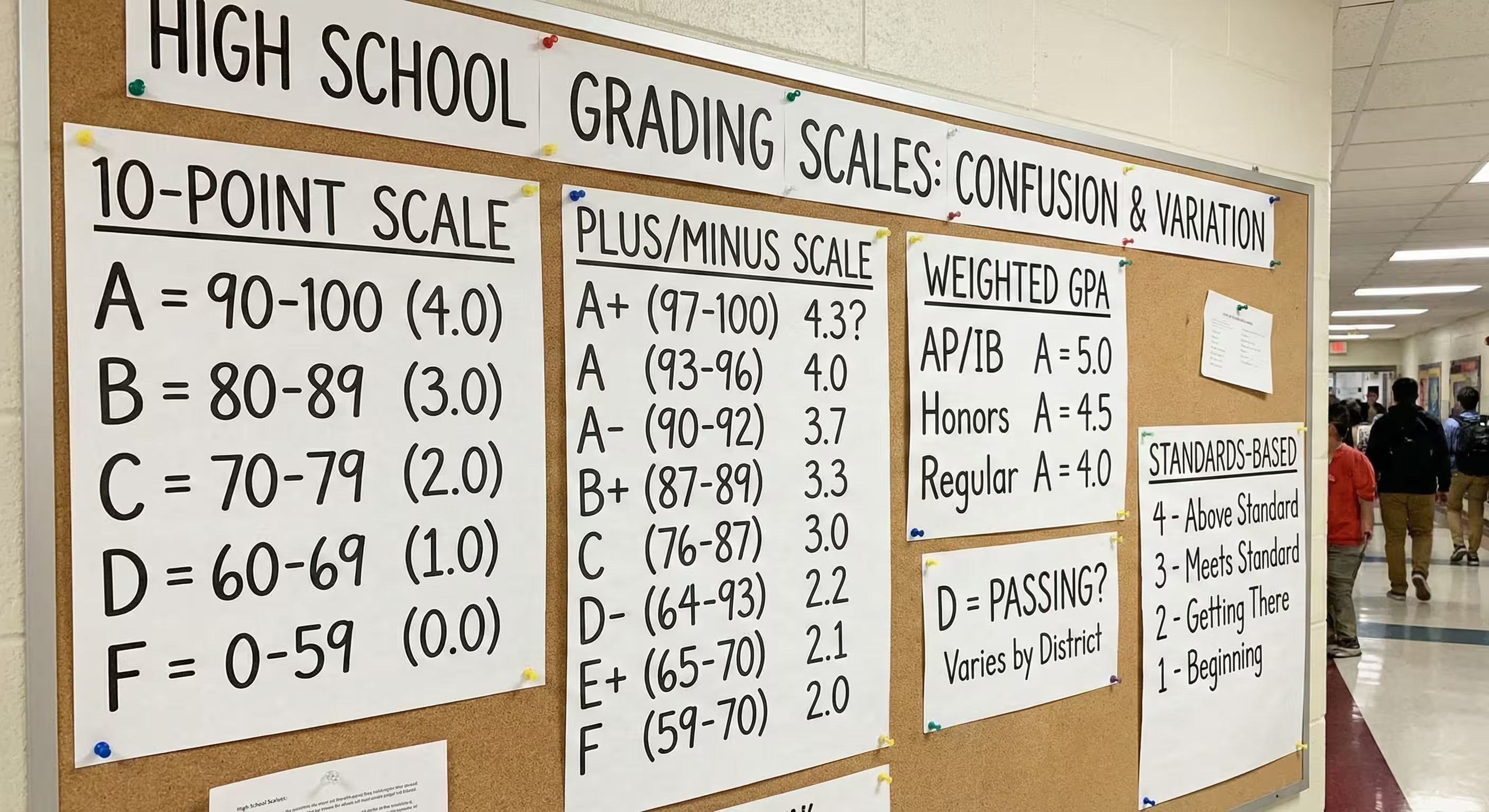
Two students can earn the same percent, do the same work, and still get different GPA points. The reason is simple: percent-to-letter cutoffs are not universal. Some schools start an A at 93%. Others start an A at 95%. Some schools use plus-only (no minuses). Some schools block D− or C−. Some schools only use plus/minus in certain classes.
That is why the safest rule is: follow your transcript first. If your transcript says A−, treat it as A− in your calculation. If your school publishes a chart, use it. If you want a quick check of common U.S. patterns, compare with the high school grading scales chart and the percentage to 4.0 GPA conversion.
The A+ problem that makes high achievers feel punished
The biggest complaint about plus/minus is not “B+.” It is A+ vs A−. In many schools, A+ = 4.0 and A = 4.0, but A− = 3.7. That setup gives no reward for perfect work, yet it gives a real penalty for a near-A. Students feel that imbalance fast.
Some schools handle A+ differently. Cornell University uses a higher scale where A+ can be worth more than 4.0. Rice University changed policies in the past. UC Berkeley and University of Maryland cap A+ at 4.0.
If you need the basics first, the unweighted GPA calculator 4.0 scale breaks down what “unweighted” means in plain terms.
Why plus/minus helps some students and hurts others
Plus/minus is not always “GPA deflation.” It depends on your grade pattern. Students who earn many B+ and C+ often see small gains. Students who earn many A− and B− often see small drops. Large studies show a big middle group stays close to unchanged, while smaller groups rise or fall.
A quick way to think about it: plus/minus adds detail. If your grades cluster near the top of a letter band (like 89% or 79%), pluses can help. If your grades cluster near the bottom of the A band (like 90–92%), minuses can hurt.
To understand the math behind this, read quality points vs GPA explained and then compare it with the GPA formula guide. Once you see “points × credits,” the pattern becomes clear.

How to calculate an unweighted GPA with plus/minus grades
A clean unweighted plus/minus calculation uses four moves:
- Convert each letter grade (like B+) into grade points (like 3.3).
- Multiply grade points by credit hours to get quality points.
- Add all quality points.
- Divide by total credits attempted.
This matters most when classes have different credits. A 4-credit class can outweigh a 1-credit class. If your inputs feel messy, the credits and course level input guide shows how to enter credits the right way. If you prefer a direct tool, the college GPA calculator helps many students avoid manual errors.

Whole-letter vs plus/minus: the side-by-side check that lowers anxiety
Many students calm down when they see both numbers. The comparison answers a real question: “Is this system changing my result a lot, or a little?” For many grade mixes, the change is small. For some mixes, it is noticeable.
A good comparison uses the same transcript and runs two scoring rules:
- Plus/minus: A− = 3.7, B+ = 3.3, and so on
- Whole-letter: A = 4.0, B = 3.0, C = 2.0, D = 1.0
If you want to understand why your number “looks wrong,” the why GPA does not match transcript guide is a strong troubleshooting checklist. It pairs well with common GPA calculation errors to avoid.
The 92.9% story: stress rises even when the math barely changes
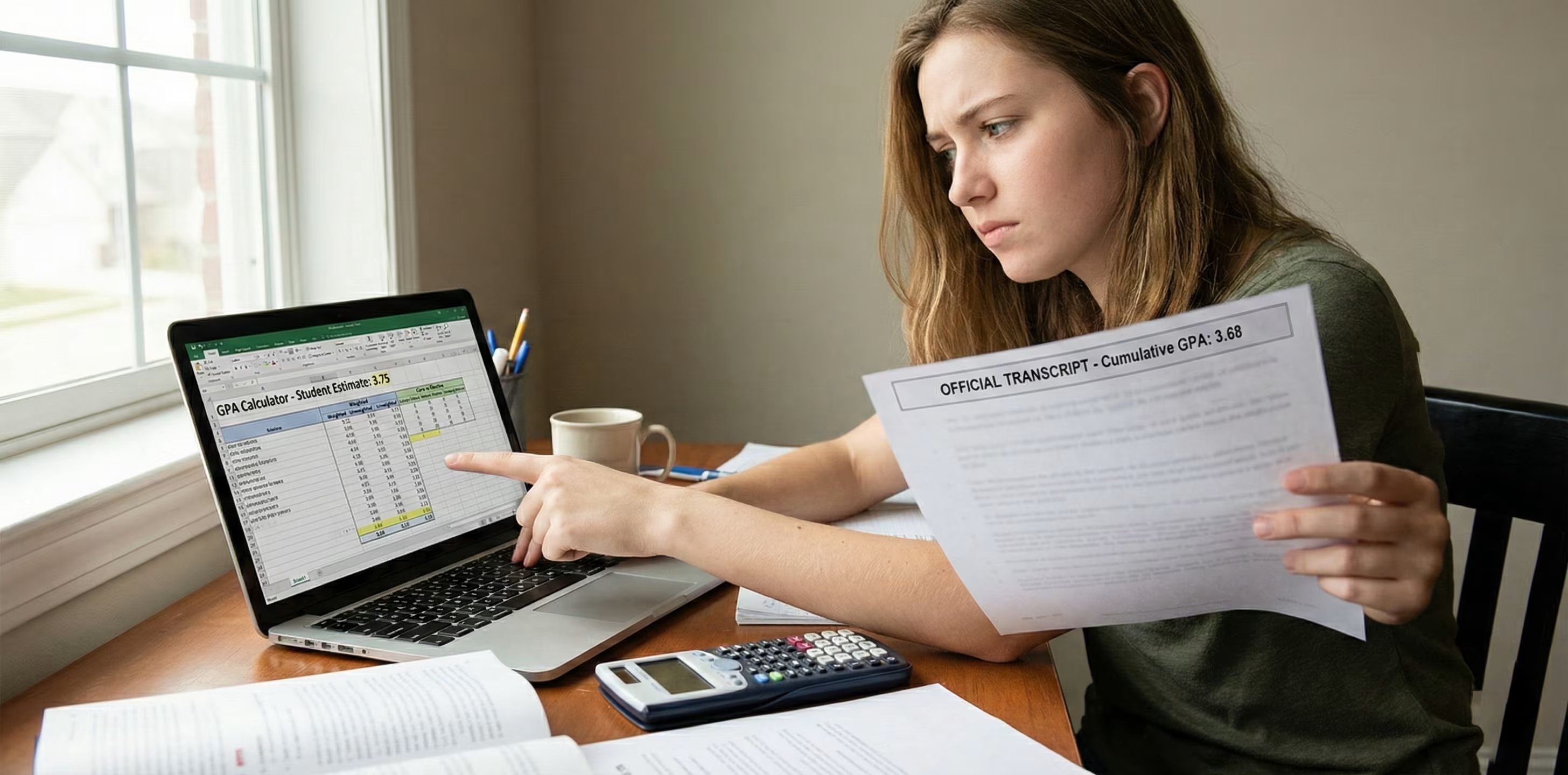
Plus/minus affects mental health more than many schools expect. A student can do “A-level work,” land at 92.9%, and get A−. That one minus can break a perfect term and change scholarships, honors, or self-confidence. The pressure often shifts from “learn the material” to “protect the cutoff.”
This stress shows up in student posts on Reddit and in grade-appeal behavior at some schools. Students also report more fights over tiny points near boundaries.
If you are trying to raise grades without burning out, keep it simple: tighten habits, not panic. Start with study tips for better grades and use the time management templates for GPA to build a weekly routine you can repeat.

Why colleges may recalculate your GPA from the transcript
Students often think their GPA is a single fixed number. In real admissions, teams can read your transcript and compute their own GPA using their own rules. Some schools remove weighting. Some ignore plus/minus. Some focus on core classes. Some build a trend view across years.
This matters because it changes what you should do next. You should still report your official GPA if the application asks for it, but you should also know that your transcript grades carry the real story.
A common example is University of Michigan, which is known for using its own review methods rather than trusting every school’s GPA style.
To learn the logic behind recalculation, see transcript GPA audit guide and how school districts calculate GPA.
Professional programs care about scale rules more than students expect
Professional programs often standardize grades. That can change the value of plus/minus and A+. Law school is a big case. Law School Admission Council (LSAC) can treat A+ as higher than 4.0 on its scale, which can help students from schools that award real A+ points and limit others.
Medical and graduate routes also have their own benchmarks. AMCAS reporting and school policies can shape how GPA is viewed in practice.
If you are aiming for a specific path, compare your goals with the GPA benchmarks for professional programs and the medical school GPA averages AMCAS 2024-2025.

Plus/minus and grade inflation: what changes and what does not
Schools sometimes adopt plus/minus to “fix grade inflation.” The average GPA often does not move much. What changes is the distribution. Many old “A” grades become A−. Fewer students keep a perfect 4.0. That feels like deflation for top students, even if the campus average stays steady.
The key point is simple: plus/minus makes the top band stricter and the middle bands more detailed. A student who often earns 89% can finally get credit for being near an A. A student who often earns 90–92% can lose points even if the work is strong.
If you want a clear view of inflation vs deflation language, see GPA inflation vs deflation. If you want to compare systems, the types of GPA scales page helps you spot what your school is really using.

Common mistakes students make with plus/minus unweighted GPA
Most errors come from mixing rules. Students use a “standard” chart even when their school uses a different cutoff. Students also forget to weight by credits, or they enter a percent grade and assume the tool will guess the letter. A few simple checks prevent most mistakes:
- Use the letter grades exactly as shown on your transcript.
- Confirm how your school treats A+.
- Enter correct credits for each class.
- Keep repeats, pass/fail, and incompletes separate if your school does.
If your GPA feels off, run an audit with how to calculate GPA and then compare with common GPA calculation errors to avoid. If your school uses special credit rules, credit hour weighting GPA guide can save you a lot of confusion.
Use calculators to plan semesters and protect key thresholds
The best use of a plus/minus GPA calculator is planning. You can test “what if” outcomes before grades lock. This helps you decide where to focus time. It also helps you spot risky thresholds, like hovering near an A− boundary.
Two tools help most students:
- The cumulative GPA calculator for your full record
- The semester GPA calculator for the current term
If you have special grading cases, plan them early. An incomplete can change your term math later, so the GPA planning for incomplete grades guide can be useful.

Frequently Asked Questions
Does plus/minus always lower an unweighted GPA? No. It depends on your grade mix. Many B+ and C+ grades can raise GPA, while many A− and B− grades can lower it.
Is A+ worth more than 4.0 in unweighted GPA? Sometimes. Many schools cap A+ at 4.0. Some programs treat A+ as higher. Use the unweighted GPA calculator 4.0 scale and confirm your school policy.
Should I report my school GPA or my own calculation? Report what the application asks for. Schools often read transcript grades and may recompute GPA anyway. The transcript GPA audit guide helps you sanity-check your numbers.
How do I convert percentages to plus/minus points? First map percent to letter using your school cutoffs, then map letter to points. The percentage to 4.0 GPA conversion guide can help when your school publishes clear ranges.