
| Key Takeaways | |
|---|---|
| Unweighted GPA with plus/minus still uses the 4.0-style scale (no AP/Honors bonus), but it gives different points for A−, B+, B−. | |
| Most schools change each plus/minus step by ~0.3 (example: B+ = 3.3, B = 3.0, B− = 2.7). | |
| An A− can lower a 4.0 to about 3.7 if your school counts minus grades in GPA. | |
| Some schools show ± on report cards but still compute GPA as straight A/B/C. Always check your transcript rules. | |
| Colleges often review the full transcript and may recalculate GPA, so the raw number is not the whole story. |
Unweighted GPA with plus/minus grades: what it really means
Unweighted GPA With Plus/Minus Grades uses a normal unweighted scale. That means AP and Honors do not add extra points in the unweighted number. The only change comes from the letter details: A, A−, B+, B, B−, and so on.
Plus/minus grading adds more slices inside each letter band. A student with mostly B+ grades can land above 3.0, while a student with mostly B− grades can land below 3.0. That is the core idea: more detail, more movement.
If you want a fast check, use a high school GPA calculator that supports unweighted inputs and letter grades, then compare it with your transcript rules.
 Try the high school GPA calculator at high school GPA calculator.
The most common plus/minus conversion chart on a 4.0 scale
Many schools use a simple pattern: A and A+ both cap at 4.0, and each minus or plus step shifts by about 0.3. The table below matches what many students see in U.S. schools, but your school can change it.
| Letter | Common points (unweighted) |
|---|---|
| A / A+ | 4.0 |
| A− | 3.7 |
| B+ | 3.3 |
| B | 3.0 |
| B− | 2.7 |
| C+ | 2.3 |
| C | 2.0 |
| C− | 1.7 |
| D | 1.0 |
| F | 0.0 |
Your school may also set percent bands (like 90–92 for A−). The key is the points table, not the percent labels. If your GPA seems “off,” compare your transcript to a letter-to-point table.
 Use a guide like letter grade to GPA conversion guide.
A+ on 4.0 vs 4.33: the rule that changes top GPAs
Some schools treat A+ as 4.0. Others treat A+ as 4.3 (or 4.33). This one choice can shift class rank and honor cords, even if students earn the same grades.
If your school caps A+ at 4.0, an A+ helps your grade, but it does not push your unweighted GPA above 4.0. If your school uses 4.33, one A+ can raise the average a bit, especially with many credits.
The safest move is simple: use the exact scale your school uses. If you do not know the table, your report card might show letters, but the student handbook or transcript profile usually lists the points.
If you need a quick sense of how different scales behave, compare 4.0 vs higher caps with a scale explainer.
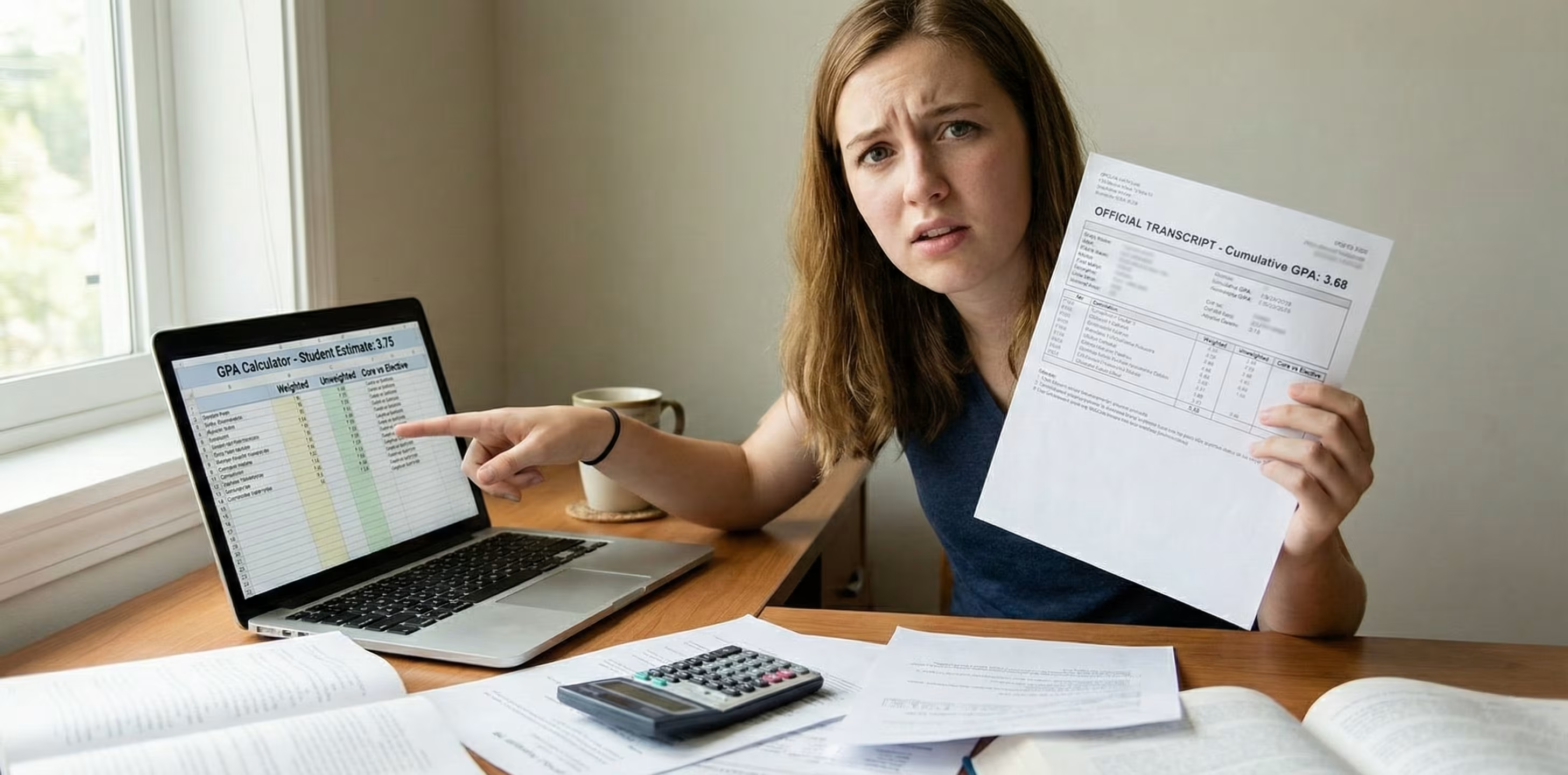 See types of GPA scales.
How to calculate unweighted plus/minus GPA with credits
The math stays clean. You convert each letter grade to points, multiply by credits, then divide by total credits.
- Quality points = (grade points) × (credit hours)
- GPA = (total quality points) ÷ (total credits)
Plus/minus only changes the grade points part. Credits still control weight. A 1-credit class moves your GPA less than a 5-credit class, even if both have the same letter.
If your school uses semesters, quarters, or trimesters, the timing can change how your average looks during the year. A strong early term can lift your cumulative. A weak term can drag it down.
For a running total across terms, use a cumulative tool that handles credits.
 Try cumulative GPA calculator and read quality points vs GPA explained.
Example: B+, B, B− across three equal-credit courses
A quick example shows why plus/minus feels “fair” to some students.
Courses (3 credits each): B+, B, B− Points: 3.3, 3.0, 2.7
- Total quality points = (3.3×3) + (3.0×3) + (2.7×3)
- Total quality points = 9.9 + 9.0 + 8.1 = 27.0
- Total credits = 3 + 3 + 3 = 9
- GPA = 27.0 ÷ 9 = 3.0
That “middle” result makes sense because the grades balance out. If the set shifts to two B+ and one B, the GPA rises above 3.0. If it shifts to two B− and one B, it falls below 3.0.
If you want to test many mixes fast, a bulk term tool helps.
 Use semester GPA calculator and avoid common traps in common GPA calculation errors to avoid.
Example: why a transcript full of A− can feel like “GPA deflation”
In a straight-letter unweighted system, many schools treat A and A− the same. Both land at 4.0. Under plus/minus, A− becomes 3.7, so the same work can produce a lower GPA number.
Here is a simple view:
- Straight-letter system: 8 classes of A− → often reads as 4.0
- Plus/minus system: 8 classes of A− → often averages to 3.7
This is why students say an A− “kills a 4.0.” The number drops, even though the transcript still shows strong grades.
The better way to think about it is this: the transcript tells the story. Many colleges read the pattern. They see consistent A-range work. They also know schools use different tables.
If you want to compare how this looks next to weighted numbers, keep a clean reference page.
 Read weighted vs unweighted GPA guide.
Unweighted plus/minus vs weighted plus/minus: don’t mix the two
Two systems can look similar but behave very differently:
- Unweighted plus/minus: AP and Honors get no extra points. Only the ± changes the value.
- Weighted plus/minus: the school adds a bonus (often +0.5 or +1.0) on top of the ± value for advanced classes.
A common confusion happens when a student sees an “A− in AP” listed as something like 4.2 on a transcript report. That is weighted math. Your unweighted calculator should still treat that A− as 3.7 (if the school counts minus grades).
This matters for comparisons. Two students can both have a “3.9,” but one got it from hard weighted courses, and one got it from unweighted courses.
Keep both numbers clear in your records. If you report one on an application, match the label.
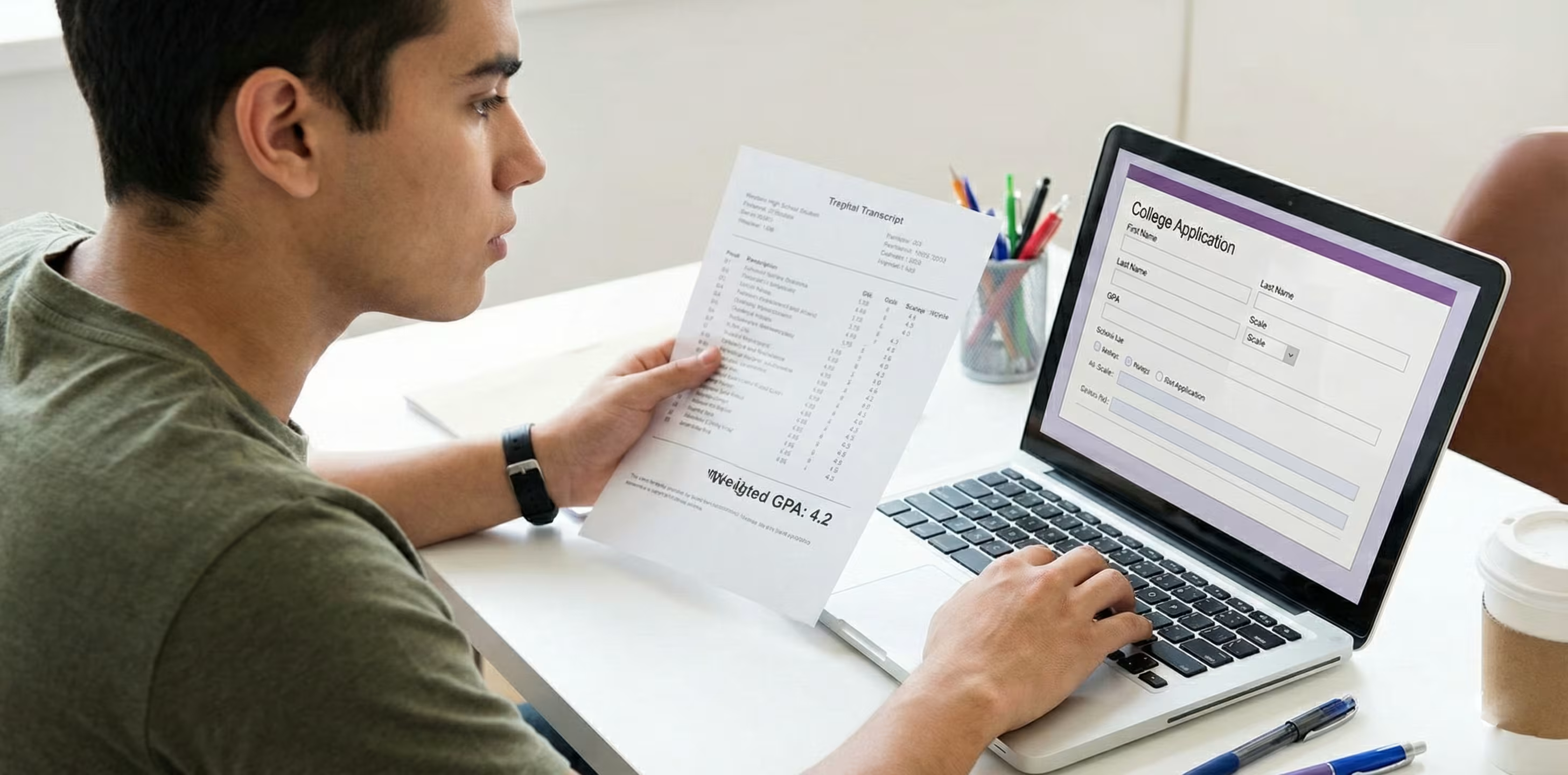 See weighted vs unweighted GPA explained and GPA weighting guide for honors and AP.
What counts and doesn’t count when plus/minus exists
Plus/minus only matters if your school both records it and uses it in GPA math. Many schools do one but not the other.
Common rules to check:
- The transcript shows A− / B+ / C−, and the GPA also uses them.
- The report card shows ±, but the GPA uses straight A/B/C values.
- The school lists ± grades, but it does not offer every option (like no A+ or no C−).
Also check special grading types:
- Pass/Fail can count for credit but not GPA.
- Incomplete can show as a placeholder, then change later.
- Repeated courses can replace or average, based on policy.
If your GPA does not match what you expect, it often comes from one of these rules, not from your math.
 Use what counts in unweighted GPA and how pass/fail grades impact your GPA.
Why colleges may ignore plus/minus when they recalculate GPA
Many colleges compare students from thousands of high schools. That means they often focus on:
- Course level (regular vs honors/AP/IB)
- Core courses (math, English, science, social studies)
- Trend over time (strong finish matters)
- School profile and grading rules
Some colleges recalculate to a common method. In that case, they may drop plus/minus details, or they may use their own conversion table. This is one reason a student can see a high school GPA that looks “low,” but still earn strong admissions outcomes.
The most helpful move is to keep your own numbers organized. Track your term GPA, cumulative GPA, and course list. Then you can answer questions fast during applications and scholarship forms.
If you want context for why numbers shift, review district-level methods and recalculation rules.
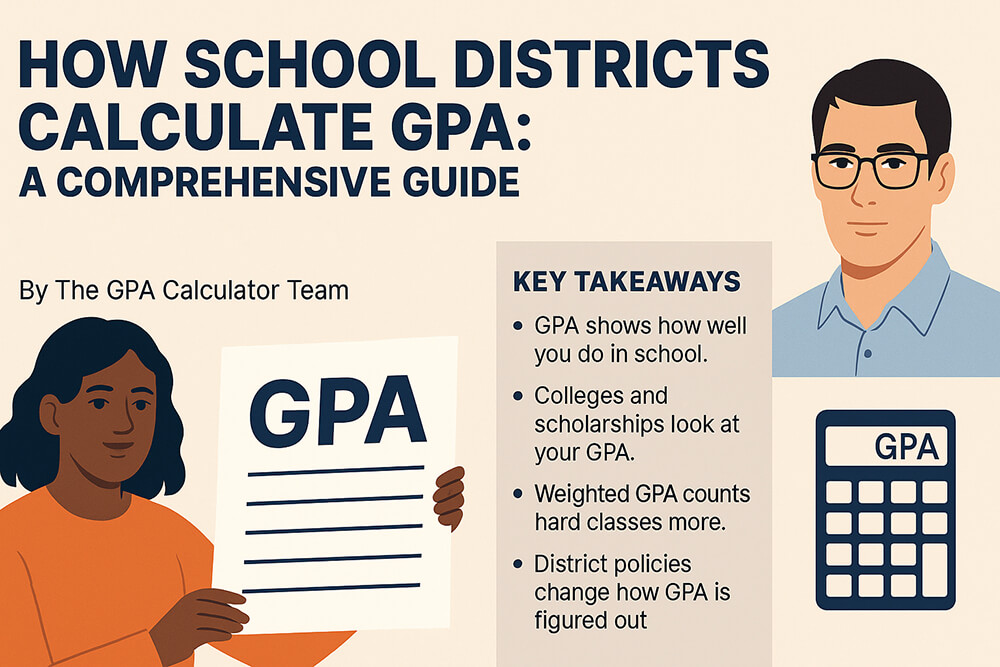 Read how school districts calculate GPA and why GPA does not match transcript.
“Is my 3.5 with plus/minus equal to a 3.7 without it?”
A single GPA number can hide the grading policy behind it. A 3.5 in a strict plus/minus system can reflect many A− and B+ grades. A 3.7 in a straight-letter system can reflect a similar record, but the table rounds up.
Instead of guessing, compare these items:
- Do both schools cap A+ at 4.0 or allow 4.3?
- Does one school ignore ± in GPA math?
- Are course credits the same?
- Did one student take more advanced courses?
Admissions readers often understand these differences. They look at the transcript pattern and course rigor, not only the final number.
If you want a simple lens, think in ranges: a GPA in the mid-to-high 3s usually signals strong work, and context fills in the rest.
 See GPA inflation vs deflation and GPA scale comparison.
How to raise your GPA under plus/minus rules
Plus/minus systems reward small improvements inside a band. That is good news because small changes can move the number.
High-impact moves that fit most students:
- Push 89 to 90 when the table jumps from B+ to A−.
- Protect the “easy points” in homework and quizzes.
- Fix missing work fast, since zeros hurt more than one low test.
- Use office hours or tutoring for one weak unit, not the whole class.
- Plan a strong next term if last term went poorly.
A clean term can lift your cumulative more than you expect, especially early in high school or early in college. Keep your credit weights in mind. Put extra effort into higher-credit classes.
If you want a simple plan, use a term-to-cumulative guide and a practical study checklist.
 Read how to raise semester GPA and study tips for better grades.
Tools that help you audit plus/minus GPA and avoid mistakes
Most GPA errors come from three sources: the wrong conversion table, wrong credits, or grades that should not count.
A good audit takes only a few minutes:
- Match your school’s letter-to-point table.
- Confirm credit hours for each course.
- Separate pass/fail and incomplete items if they do not count.
- Verify if your school averages repeats or replaces them.
If you track GPA for applications, a small tool set can keep you calm: a term calculator, a cumulative calculator, and a transcript check page. It also helps for transfer forms, where schools may treat credits in a special way.
If you plan to share your numbers with a counselor or parent, a clean record avoids rework and stress later.
 Use transcript GPA audit guide and how to calculate GPA.
Frequently Asked Questions
Does an A− lower my unweighted GPA?
Yes, if your school counts minus grades in GPA math. In many plus/minus tables, A− = 3.7, so many A− grades pull the average below 4.0. If your school uses straight-letter math, A− may still count as 4.0. Check unweighted GPA calculator 4.0 scale for the base rule and unweighted GPA plus/minus calculator for the ± version.
Is unweighted plus/minus still “unweighted”?
Yes. “Unweighted” means no bonus for AP or Honors in the unweighted number. Plus/minus only changes points inside each letter band. For a clean comparison, see weighted vs unweighted GPA and weighted vs unweighted GPA calculator.
Does A+ always equal 4.3 or 4.33?
No. Many schools cap A+ at 4.0. Some schools use 4.3/4.33 for A+. Always use your school’s conversion table. A quick reference is unweighted GPA conversion chart and GPA conversion charts tools.
Why does my GPA not match my transcript grades?
A mismatch often comes from rules about credits, repeats, pass/fail, or incompletes, or from a school that shows ± but computes straight-letter GPA. Use why GPA does not match transcript and common GPA calculation errors to avoid.
Do colleges treat plus/minus GPAs differently?
Many colleges review the transcript and may recalculate GPA with their own rules. That can reduce the impact of your school’s ± details. Keep your course list clean and understand your school profile. See how school districts calculate GPA and GPA requirements for college admissions.
How do pass/fail grades affect an unweighted plus/minus GPA?
Most pass/fail grades add credit without changing GPA, but policies differ. If your school counts them, the impact can be large. Use unweighted GPA pass/fail impact and how pass/fail grades impact your GPA.
How can I plan next term if one class is dragging my GPA down?
Focus on credit-heavy classes first, then target one band jump (like B+ to A−) in the class that gives the best payoff. Use semester GPA to cumulative GPA guide and raise my GPA action plan.